
DTF Printer Print Heads Explained: XP600 vs i1600-A1 vs i3200-A1 (2026 Comparison)
Quick answer: The Epson XP600 (F1080-A1) is the most affordable DTF print head and fits shops doing fewer than 20–30 transfers a day. The Epson i1600-A1 sits in the middle, giving small-to-medium shops more speed and a longer service life without the cost of an industrial head. The Epson i3200-A1 is the print head to choose once you're running a full production floor — it lasts the longest, prints the fastest, and has the lowest cost per square meter over time, even though it costs more upfront.
If you've been comparing DTF printers, you've probably noticed the specs sheets all lead with one thing: the print head. Two machines can look almost identical — same frame, same RIP software, same footprint — and still produce completely different results, because the print head decides your resolution, your print speed, how often you'll replace it, and ultimately your cost per shirt. This guide breaks down the three print heads that power almost every DTF printer on the market today, so you can match the right one to your production volume instead of guessing.
Why the Print Head Matters More Than the Printer Brand
Most DTF printers — regardless of the manufacturer's name on the case — are built around the same handful of Epson PrecisionCore print heads. The frame, the feeding system, and the software differ between brands, but the print head is what actually determines:
- Print quality — nozzle count and droplet size control fine detail, gradients, and white ink coverage.
- Production speed — how many square meters you can output per hour.
- Running cost — replacement frequency and price per head.
- Reliability — how forgiving the head is to ink quality, humidity, and downtime.
That's why the smartest way to shop for a DTF printer isn't "which brand," but "which print head fits my order volume."
XP600 vs i1600-A1 vs i3200-A1 at a Glance
| Print Head | Nozzles | Typical Speed | Head Lifespan | Best For |
|---|---|---|---|---|
| Epson XP600 / F1080-A1 | ~180 x 2 rows | 10–12 m²/h | 3–9 months | Startups, side hustles, < 30 transfers/day |
| Epson i1600-A1 | 1,600 | Faster than XP600, below i3200 | 6–12 months | Growing shops, 30–100 transfers/day |
| Epson i3200-A1 | 3,200 | Highest of the three | 8 months–3 years | Commercial production, 100+ transfers/day |
Note: exact figures vary by printer manufacturer, ink brand, pass settings, and how well the head is maintained. Treat this table as a directional guide, not a guarantee.
Epson XP600 (F1080-A1) — Best for Entry-Level & Small Shops
The XP600 — sold under the model name F1080-A1 in most DTF printers — is the most widely used entry-level head in the industry. It's a 6-color piezo head typically configured as CMYK+W or CMYK+CM, and it's the head you'll find in nearly every compact desktop DTF printer.
Strengths:
- Lowest acquisition cost, both for the head itself and the printer built around it.
- Simple to maintain and widely supported by RIP software and consumables suppliers.
- Good enough resolution for most apparel graphics, logos, and photo-style prints at normal viewing distance.
Trade-offs:
- Shorter service life under daily heavy use — expect a replacement every few months if you're printing full-time.
- Lower throughput, so it's not the right choice once daily order volume climbs.
- More sensitive to ink viscosity and clogging if maintenance is inconsistent.
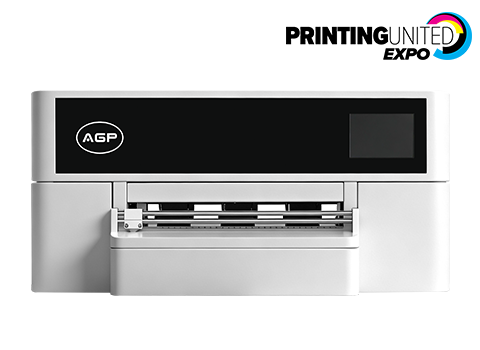
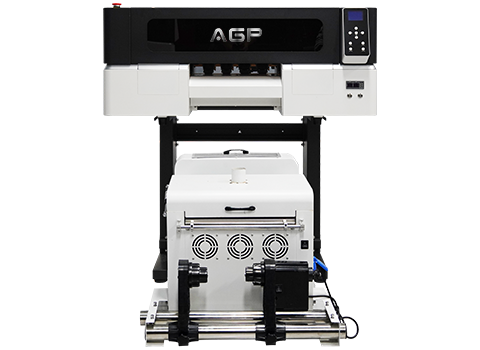
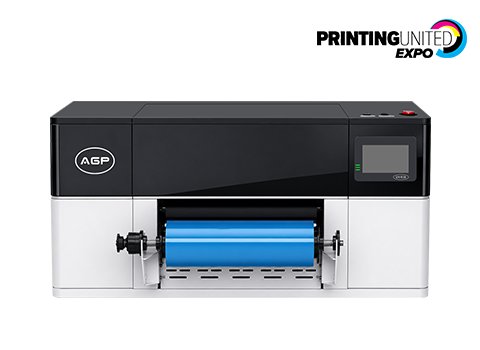
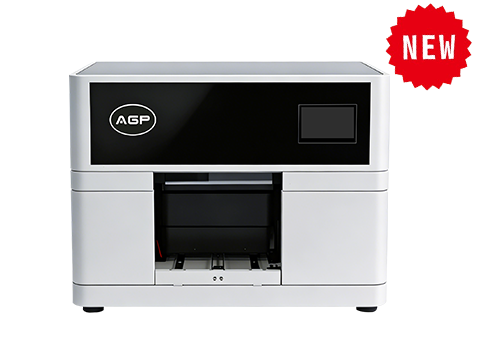
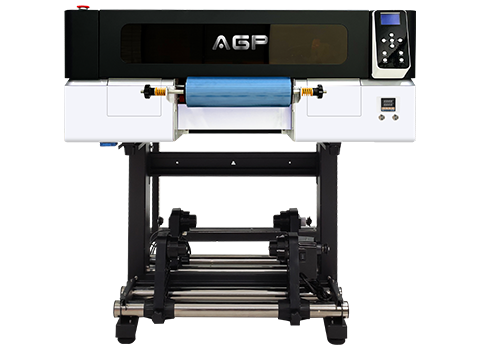
AGP printers using this head: the DTF-E30 and DTF-E30 T are both single-head, 300–330mm machines built around the F1080-A1 head — a practical entry point if you're just starting out and want to test the market before scaling up.
Epson i1600-A1 — The Mid-Volume Sweet Spot
The i1600-A1 is essentially a smaller sibling of the i3200-A1, built on the same PrecisionCore platform, sharing the same droplet technology and resolution — just with half the nozzles. That makes it a genuine middle option rather than a compromise: better durability and speed than the XP600, at a lower cost than the i3200-A1.
Strengths:
- Noticeably longer service life than the XP600 under the same workload.
- Same print quality characteristics as the i3200-A1, just at a lower throughput.
- A logical upgrade path for shops that have outgrown a single XP600 head but aren't ready for a full industrial setup.
Trade-offs:
- Still slower than the i3200-A1 for high-volume runs.
- Fewer printer models on the market use it compared to the other two heads.
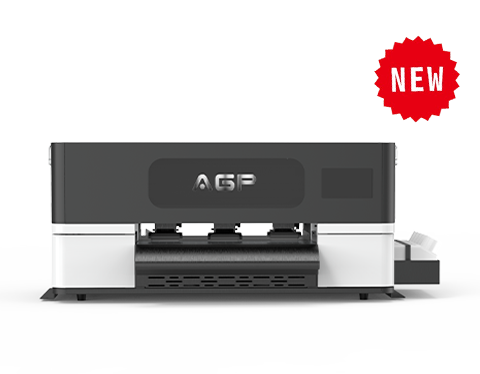
AGP printers using this head: the DTF-T30 is configured with 2–3 Epson i1600-A1 heads on a 300mm width, giving you meaningfully more speed than a single-XP600 machine while keeping the machine cost manageable.
Epson i3200-A1 — Built for Industrial Production
The i3200-A1 is the head serious print shops standardize on. With 3,200 nozzles and Variable Sized Droplet Technology, it produces sharper gradients, cleaner white ink layers, and noticeably higher output per hour than the other two heads. Most multi-head, wide-format DTF printers — the machines built for daily commercial runs — use this head exclusively.
Strengths:
- Longest service life of the three, often lasting a year or more with proper maintenance and white ink circulation.
- Highest print speed and resolution, especially noticeable on detailed artwork and photo-realistic designs.
- Lower cost-per-square-meter over time despite a higher upfront price, because you're not constantly buying replacement heads.
Trade-offs:
- Highest upfront investment, both for the head and the printer it's built into.
- Only makes financial sense once your order volume actually needs the throughput.
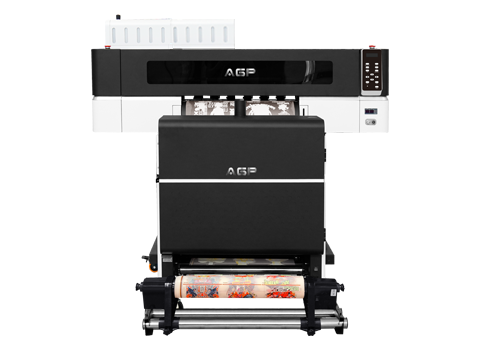
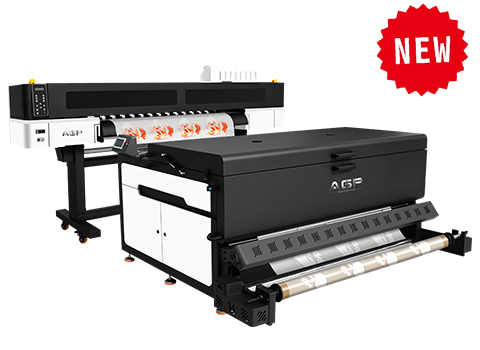
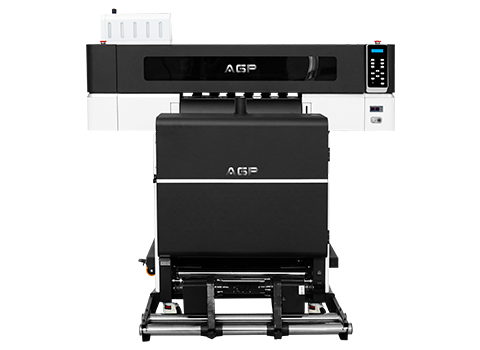
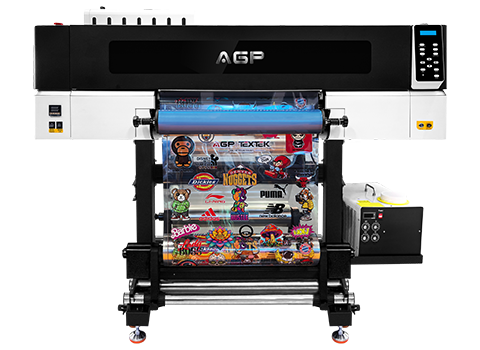
AGP printers using this head: the DTF-T652/653/654 (2–4 heads, 600mm), DTF-T656 (5–6 heads, 600mm), and the wide-format DTF-TK1600 (5–6 heads, 1600mm) are all built around the i3200-A1, letting you scale from a mid-size shop up to a full production floor without changing print head technology.
A Real-World Cost Example
Numbers make this easier to picture. Say you run one XP600 head at full-time daily use and replace it roughly every 4 months at $280 per head — that's about $840 a year in head replacements alone, not counting the downtime for each swap. An i3200-A1 head at $800 that lasts 18 months under the same workload works out to roughly $530 a year — cheaper per year despite costing nearly three times as much to buy, and with far less downtime. This is why shops that scale past a certain order volume almost always end up on i3200-A1 machines: the head pays for itself in reduced replacement frequency and higher daily output.
How to Choose the Right Print Head for Your Business
| Your Situation | Recommended Head | Why |
|---|---|---|
| Testing DTF as a side hustle or new Etsy shop | XP600 / F1080-A1 | Lowest entry cost, low risk while you validate demand |
| Steady daily orders, outgrowing a single-head machine | i1600-A1 | Meaningful speed jump without industrial-level investment |
| Wholesale, contract printing, or multiple retail clients | i3200-A1 | Best cost-per-print at volume, longest uptime |
| Wide-format transfers, gang sheets, large production floor | Multi-head i3200-A1 (5–6 heads) | Maximum throughput per shift |
If you're still narrowing down machine width, pass count, and white ink systems on top of the print head decision, our DTF printer buying guide walks through the full checklist.
5 Tips to Extend Any DTF Print Head's Lifespan
- Never let the printer sit idle for long periods. Run a nozzle check or short print job daily, even on slow days, to keep ink moving through the channels.
- Use a proper white ink circulation system. White ink settles faster than any other color and is the most common cause of clogged nozzles. Learn more in our guide on why DTF white ink clogs and how circulation prevents it.
- Stick to inks formulated for your specific head. Off-spec viscosity is one of the fastest ways to shorten a head's life, regardless of which of the three heads you're using.
- Control your workspace humidity and temperature. Heads clog faster in dry, dusty, or overly hot environments — see our DTF workspace and ventilation guide for setup tips.
- Follow proper shutdown procedures every time. Always cap the head and use the printer's built-in cleaning/parking cycle instead of just powering off.
Frequently Asked Questions
What print head do most DTF printers use?
Most DTF printers on the market are built around one of three Epson PrecisionCore heads: the XP600 (branded F1080-A1 in many machines), the i1600-A1, or the i3200-A1. The head, not the printer brand, is what mainly determines speed, resolution, and running cost.
Is the i3200-A1 always better than the XP600?
For print quality and lifespan, yes — but "better" depends on your order volume. An i3200-A1 head costs significantly more upfront, so it only pays off once your daily production actually needs the extra speed and durability. A low-volume shop can run an XP600 head profitably for a long time.
How long does a DTF print head actually last?
It depends heavily on usage and maintenance, but as a general range: XP600 heads typically last 3–9 months under regular use, i1600-A1 heads roughly 6–12 months, and i3200-A1 heads anywhere from 8 months up to 2–3 years with proper white ink circulation and daily use.
Can I upgrade my printer's print head later?
Usually not to a different head model — print heads are matched to the printer's carriage, ink supply system, and control board. If you expect to outgrow your current head within a year or two, it's often more cost-effective to buy the higher-tier machine from the start rather than replace the whole printer later.
Does a higher nozzle count always mean better print quality?
Nozzle count mainly affects speed and coverage per pass rather than resolution alone. Print quality also depends on droplet size, RIP software settings, and pass count. That said, the i3200-A1's higher nozzle count combined with its smaller droplet size does give it a real edge in fine detail and smooth gradients over the XP600.
Which Print Head Is Right for You?
If you're not sure which tier fits your production plans, AGP builds machines across all three print head levels — from the single-head DTF-E30 for shops just getting started, up to the multi-head DTF-TK1600 for full production floors. Send us your expected daily order volume and fabric types, and our team can recommend the right configuration and print width for your business.