

Bottle
Quick Answer: A UV crystal label is a UV DTF transfer applied directly onto a bottle without any backing paper or background color, creating a glossy, raised, 3D effect that looks like the design is embedded in the bottle itself. It's printed with a UV flatbed printer, positioned by hand, pressed to remove air bubbles, and cured — giving a waterproof, scratch-resistant finish ideal for beverage, cosmetic, and gift packaging.
UV crystal label is an innovative way that has become widely popular in product customization in recent years. Through UV DTF technology, a brand logo or pattern is accurately transferred onto a bottle, delivering both a premium visual effect and long-lasting wear resistance across different bottle materials. This guide covers how UV crystal labels work, how to apply them correctly, and where they perform best.
What Is a UV Crystal Label and How Does It Work?
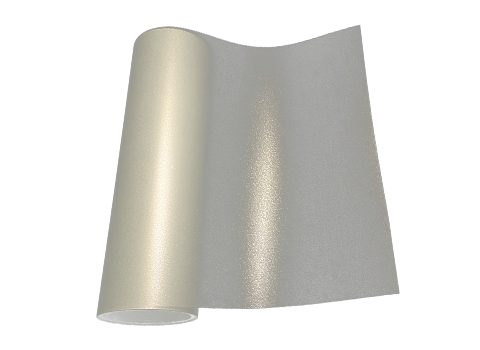
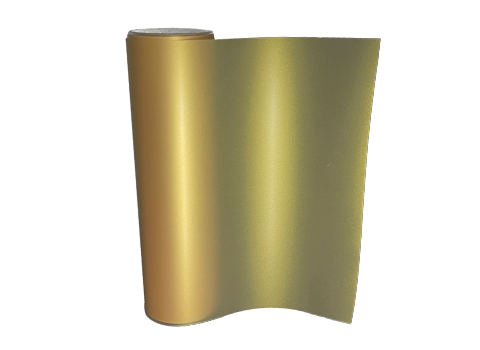
UV crystal label transfer is based on UV DTF technology. The pattern is printed onto release paper using a UV flatbed printer, then covered with a transfer film. When the printed film is applied to the bottle surface and the protective layer is peeled away, the pattern bonds directly onto the bottle — with no backing paper and no background color, so it appears fully integrated into the material itself.
This is different from a traditional printed label: because the label is fully hollowed-out around the pattern, only the design itself remains visible on the bottle, giving a transparent, luxury "crystal" look rather than a flat sticker appearance.
How Do You Apply a UV Crystal Label to a Bottle?
Getting a clean, bubble-free, long-lasting result depends on following the process precisely:
- Prepare the bottle: Clean the surface thoroughly with isopropyl alcohol or a lint-free cloth to remove dust, oil, and fingerprints — any residue will weaken adhesion.
- Print the crystal label: Use a high-precision UV flatbed printer to print the pattern onto release paper, then laminate it with a transfer film.
- Position the label: Align the printed label onto the correct spot on the bottle before pressing — once the adhesive contacts the surface, repositioning becomes difficult.
- Press out air bubbles: Use a squeegee or scraper, working from the center outward, to smooth the label and eliminate trapped air.
- Peel and cure: Slowly peel away the transfer film to reveal the finished label, then allow it to cure — avoid touching or exposing it to water for at least several hours to let the bond fully set.
Why Does a UV Crystal Label Look Different from an Ordinary Sticker?
The visual distinction comes from layered construction. UV crystal labels build up multiple material layers — adhesive, white ink, color ink, and varnish — which creates a genuine 3D texture rather than a flat printed surface. Combined with the fully hollowed-out design (no visible backing), the label appears to merge naturally with both transparent glass bottles and colored metal bottles, producing a high-end, tactile finish.
Which Bottle Materials and Industries Suit UV Crystal Labels Best?
UV crystal labels adhere well to glass, plastic, and metal bottles, and conform to both flat and curved surfaces. They are widely used across:
- High-end beverage packaging — wine and beverage bottles, elevating brand perception
- Cosmetic packaging — glass or plastic bottles that need a premium, textured brand mark
- Gifts and souvenirs — unique pattern designs that stand out on the shelf
- Home and daily products — perfume bottles, drinking glasses, thermos cups, where heat and water resistance matter
How Durable Is a UV Crystal Label?
UV crystal labels are engineered for long-term durability rather than short-term decoration. They resist high temperatures, moisture, and surface abrasion — remaining firmly attached even on candle labels exposed to heat, or on commercial tableware that goes through repeated dishwasher cycles. This makes them suitable for items that need a permanent, legible mark, such as safety helmets, food packaging, perfume bottles, and kitchen supplies.
What Are the Limitations of UV Crystal Labels?
The same durability that makes UV crystal labels valuable also makes them difficult to remove once applied. They are not designed for occasions requiring frequent replacement. For short-term decorative uses — such as notebooks or phone cases you plan to redesign often — a more removable sticker type is a better fit.
UV Crystal Label Application Process at a Glance
| Step | Action | Key Tip |
|---|---|---|
| 1. Clean | Wipe bottle with alcohol/lint-free cloth | No dust, oil, or fingerprints before applying |
| 2. Print | UV flatbed printer + transfer film lamination | Use high-precision printing for crisp fine detail |
| 3. Position | Align label on target spot | Get placement right the first time — hard to reposition after contact |
| 4. Press | Squeegee from center outward | Removes air bubbles for a smooth, bubble-free finish |
| 5. Peel & Cure | Remove film, allow to set | Avoid water contact until fully cured for maximum bond strength |
UV Crystal Label vs. Traditional Label vs. Ordinary Vinyl Sticker
| Property | UV Crystal Label | Traditional Printed Label | Ordinary Vinyl Sticker |
|---|---|---|---|
| Visual effect | 3D, glossy, no visible backing | Flat, full background panel | Flat, matte or glossy finish |
| Water resistance | High | Moderate | Low to moderate |
| Scratch resistance | High | Low | Moderate |
| Fits curved bottles | Yes, tightly conforms | Limited | Yes, but may wrinkle |
| Removable / repositionable | No — permanent bond | Sometimes | Usually yes |
| Best use case | High-end, permanent branding | Standard product labeling | Temporary decoration |
Conclusion: Elevating Bottle Branding with UV Crystal Labels
UV crystal label transfer technology offers a complete solution for premium bottle customization and brand display. Whether for cosmetics, beverages, or gift packaging, UV crystal labels enhance product value through a distinctive 3D visual effect and long-term durability that traditional labels can't match. If your company needs an efficient, high-end labeling solution, UV crystal labels are worth building into your product line.
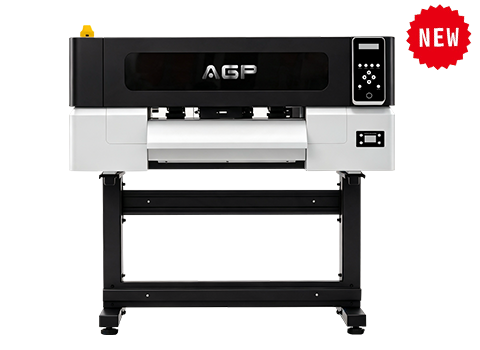
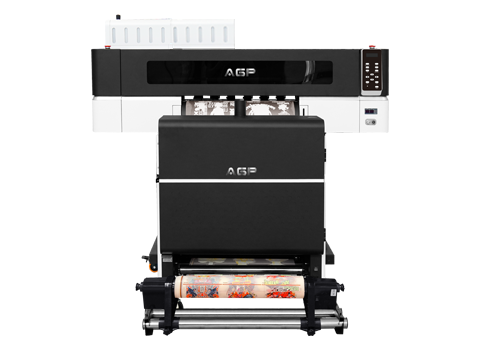
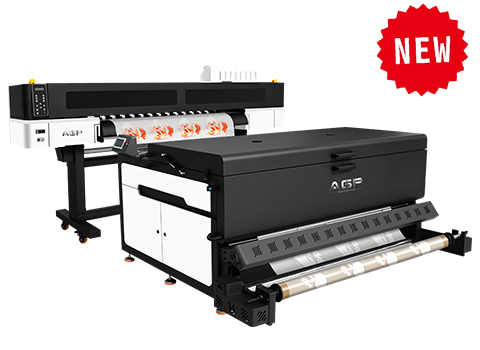
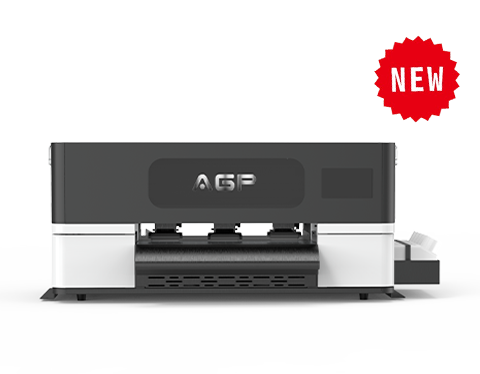
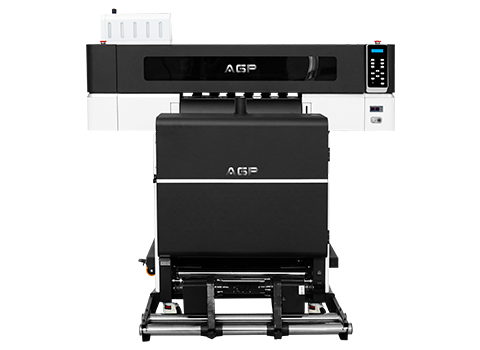
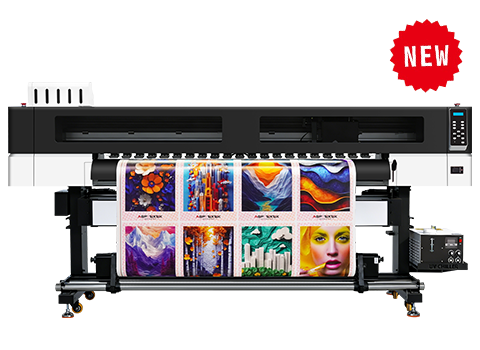
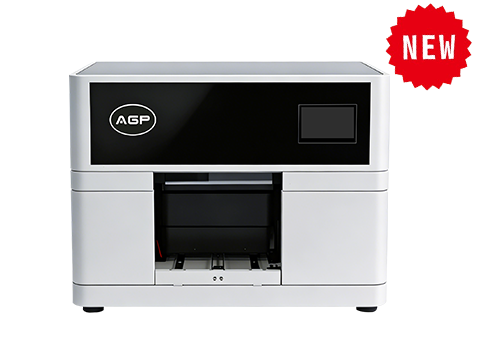
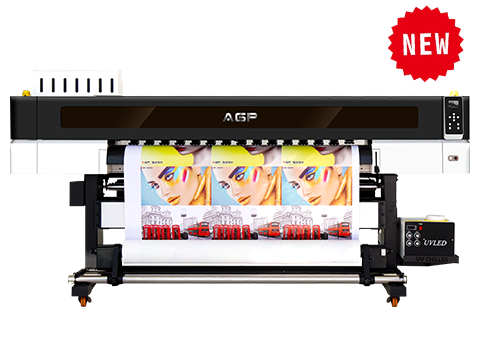
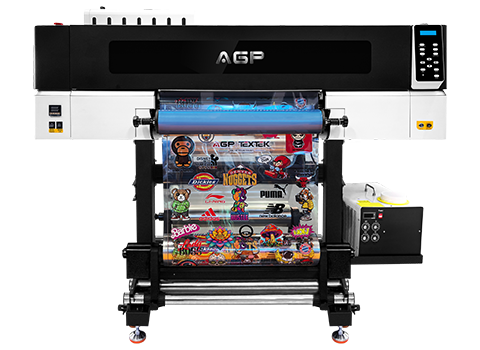
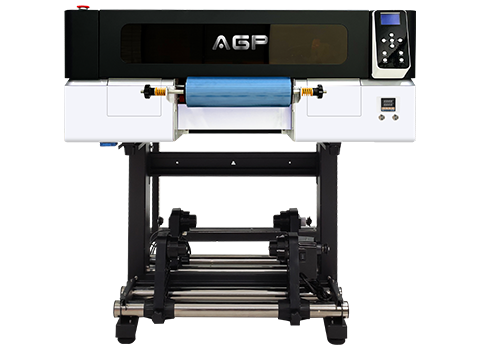
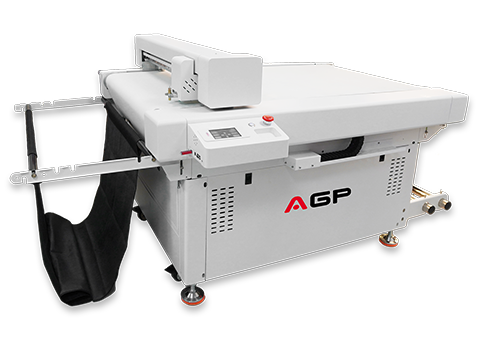
AGP provides complete UV DTF printing equipment and UV DTF film to help you produce crystal labels for bottles, glass, and other hard materials — contact our team to request a sample or discuss your production setup.
FAQ: UV Crystal Label Questions
What is a UV crystal label?
A UV crystal label is a UV DTF transfer applied directly to a surface without backing paper, giving it a glossy, three-dimensional look as if the design were embedded in the material itself.
How long does a UV crystal label need to cure before use?
After application, avoid touching the label or exposing it to water for several hours to allow the adhesive to fully bond — the exact time depends on the film and ink system used.
Can UV crystal labels go in the dishwasher?
Yes, once fully cured, UV crystal labels can withstand repeated dishwasher cycles on commercial tableware without lifting or fading, thanks to their strong bond and scratch-resistant surface.
What bottle materials can UV crystal labels be applied to?
UV crystal labels work on glass, plastic, and metal bottles, and adapt well to both flat and curved surfaces.
Can a UV crystal label be removed or repositioned after application?
No. UV crystal labels form a permanent bond and are difficult to remove without damaging the label or surface — they are not suitable for items needing frequent redesign.
What equipment is needed to produce UV crystal labels?
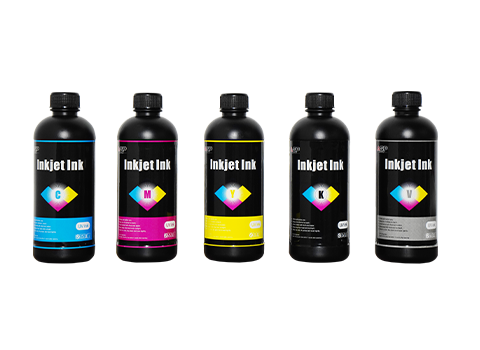
You need a UV flatbed printer, UV-curable ink, and specialized transfer film designed for UV DTF printing.
How is a UV crystal label different from a normal printed label?
A normal printed label has a full background panel and lies flat on the surface. A UV crystal label is fully hollowed-out around the pattern with no visible backing, and its layered ink structure gives it a raised, glossy 3D texture instead of a flat finish.