

Glass
How to Print Custom Designs on Glass Products with UV Printers?
Master the technical workflow for printing vibrant, scratch-resistant graphics on flat glass, wine bottles, and tumblers using UV Flatbed and UV DTF technologies.
Quick Answer & Key Insights
To print long-lasting custom designs on glass, apply a specialized Glass UV Primer Coating or use UV DTF Sticker Transfers. Flat glass sheets utilize UV flatbed printing with CMYK + White + Varnish ink layers at 1440 DPI, while cylindrical glassware (like wine bottles or glass cups) requires a rotary attachment fixture or direct UV DTF application for 100% waterproof adhesion.
Overcoming the Technical Challenges of Glass Printing
Glass items—including personalized glass mugs, wine bottles, trophy awards, decorative architectural glass, and cosmetics containers—demand precision customization. However, glass is non-porous, smooth, and hydro-phobic, making direct ink adhesion challenging without proper surface pretreatment.
With modern UV LED Digital Printing Solutions, print service providers can overcome low adhesion barriers. By leveraging specialized silane-based glass primers and UV DTF (Direct-to-Film) transfer stickers, businesses can achieve full-color, scratch-resistant, dishwasher-safe prints with vivid 3D embossing or glossy textures.
Comparing Glass Printing Methods: Direct UV Flatbed vs. UV DTF
| Method | Ideal Glass Substrates | Key Advantages | Adhesion Requirement |
|---|---|---|---|
| Direct Flatbed Printing | Flat glass panels, photo frames, glass awards, sliding doors | Heavy tactile 3D gloss texture, high production speed | Requires Glass Primer wiping prior to printing |
| Rotary UV Printing | Glass tumblers, wine bottles, beer mugs, candles | 360-degree seamless printing directly around the body | Rotary fixture + Glass Primer wiping |
| UV DTF Transfer | Irregular glassware, small perfume bottles, conical glasses | No size or height limits; easy peel-and-stick application | No primer needed; uses high-tack acrylic glue |
Step-by-Step Workflow for Direct Glass Printing
1
Degreasing & Surface Cleaning
Thoroughly wipe the glass surface with pure Isopropyl Alcohol (IPA) using a lint-free cloth. Removing finger oils, dust, and moisture is crucial for bonding strength.
2
Glass Primer Application
Apply a uniform layer of chemical glass adhesion promoter (Silane Primer) across the print area using a microfiber wipe or automatic spray tool. Allow it to air-dry for 30–60 seconds to build a molecular anchor layer.
3
Multi-Layer Printing (White + Color + Varnish)
In your RIP software, enable a 3-layer channel setup: High-Opacity White → CMYK Color → Gloss Varnish. The white background prevents transparency loss, while varnish provides scratch resistance and glossy aesthetics.
4
LED-UV Curing & Post-Cure Stabilization
Initiate printing with 395nm LED UV curing active. The UV lamps cure the ink instantaneously upon hitting the treated glass surface, rendering it immediately dry to the touch.
Recommended Specifications for Glass Printing
Resolution
1440 × 1440 DPI
Ink Formula
Hard UV Ink (High Rigidity)
Pre-Treatment
Silane Glass Primer
Fixture
Rotary Jig (for Tumblers/Bottles)
Why Choose AGoodPrinter (AGP) Equipment for Glass Customization?
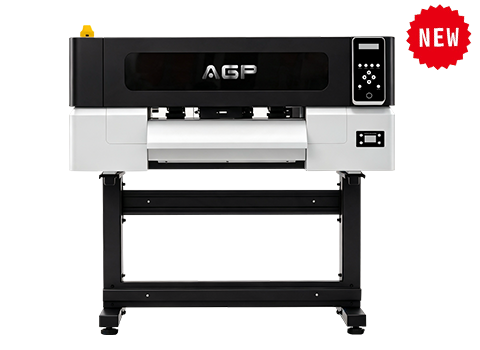
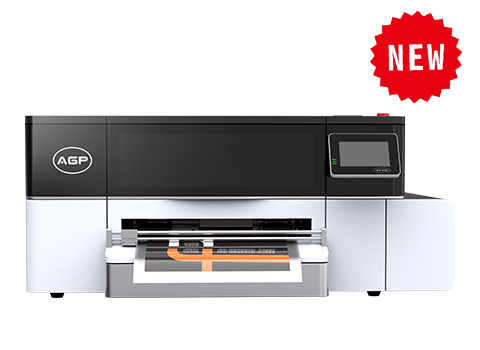
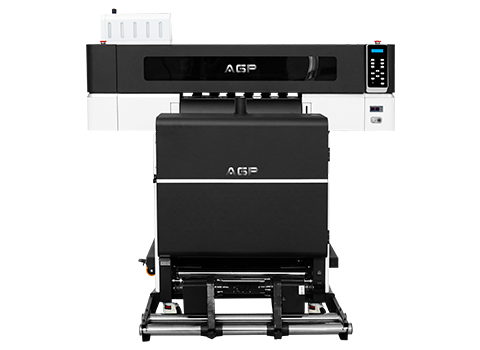
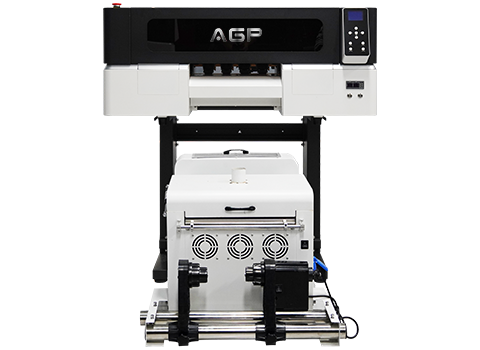
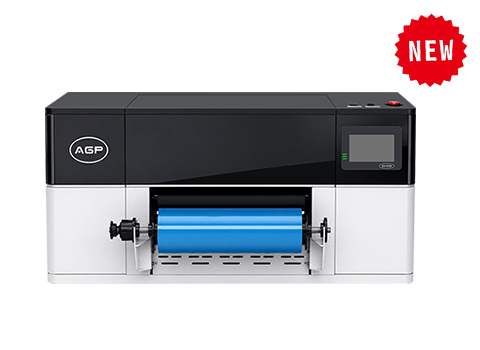
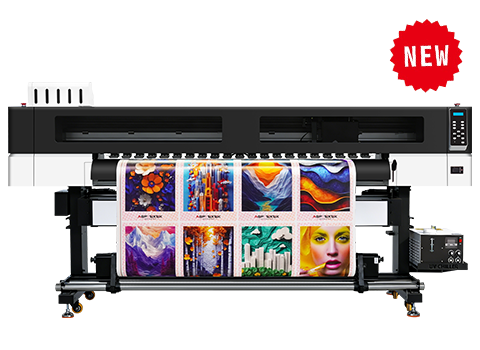
At AGoodPrinter.com (AGP), our UV flatbed machines and UV DTF equipment are built with industrial-grade components tailored for demanding substrates like glass:
- High-Precision Rotary Attachments: Seamlessly print 360-degree graphics on cylindrical glass cups and wine bottles with zero mechanical slippage.
- High-Density White Ink Circulation: Continuous white ink agitation and anti-clogging systems ensure crisp, opaque white backgrounds even during long production runs.
- Epson Industrial Printheads: Outfitted with Epson I3200-U1 printheads that deliver micro-droplet accuracy ($3.5\text{ pl}$) for fine artwork and photo-realistic glass awards.
Frequently Asked Questions (FAQ)
Q: Is UV printed glass dishwasher safe?
A: Yes, provided that a chemical glass primer was applied prior to printing and cured with hard UV ink and varnish. Hand-washing or gentle top-rack dishwasher cycles are recommended for maximum longevity.
Q: What is the advantage of using UV DTF on glass tumblers versus direct printing?
A: UV DTF allows you to transfer custom graphics onto glass tumblers of any shape, size, or curve without needing expensive rotary fixtures or liquid primers. You simply print the sticker film, apply it manually, and peel off the carrier layer.
Q: Do I need a special ink for glass substrates?
A: We recommend using **Hard UV Ink** instead of flexible ink for glass. Hard UV ink provides superior hardness, chemical resistance, and scratch resistance on rigid substrates.