
DTF Printing Explained: Print on Cotton, Polyester, Nylon & Dark Fabrics Easily
If you’ve been in the custom apparel business for even a short time, you already know one thing:
Not every fabric is easy to print on.
Cotton is usually simple. But once customers start asking for polyester sportswear, nylon jackets, spandex leggings, dark hoodies, or blended performance fabrics, things become much more complicated.
Traditional garment printing methods like screen printing and DTG printing often struggle with these materials.
Why?
Because synthetic fabrics behave differently from cotton.
Polyester and nylon are hydrophobic materials, which means they naturally resist water-based inks. Instead of absorbing ink smoothly, the surface tends to reject it. That leads to poor ink adhesion, faded colors, weak wash durability, and prints that crack after repeated stretching or washing.
Dark garments create another challenge.
Without a proper white underbase, many inks appear dull or washed out. To achieve bright colors, decorators usually need additional pretreatment steps, multiple ink layers, or complicated printing adjustments.
And honestly, all of this slows production down.
More setup time. More material waste. More failed prints.
That’s exactly why so many printing businesses are now moving toward DTF printing technology.
Direct-to-film printing solves many of these long-standing fabric compatibility problems while making production easier and more flexible.
How DTF Printing Works on Almost Any Material
DTF printing works differently compared to traditional apparel decoration methods.
Instead of printing directly onto garments, the design is first printed onto a PET transfer film using specialized DTF ink. After printing, hot melt adhesive powder is applied to the design. The transfer is then cured and pressed onto fabric using a heat press machine.
Sounds simple, right?
That’s because it actually is.
The biggest advantage is that the transfer bonds to the surface of the fabric instead of relying on the fabric to absorb ink.
This completely changes the game for difficult materials.
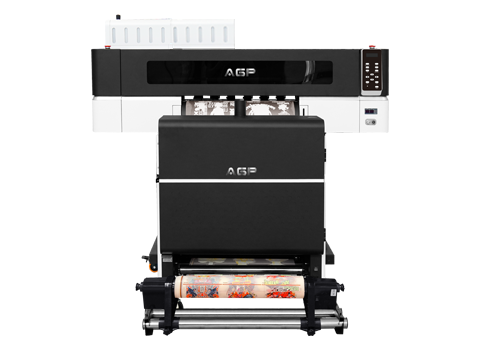
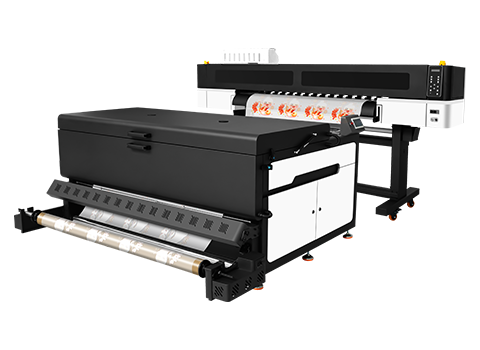
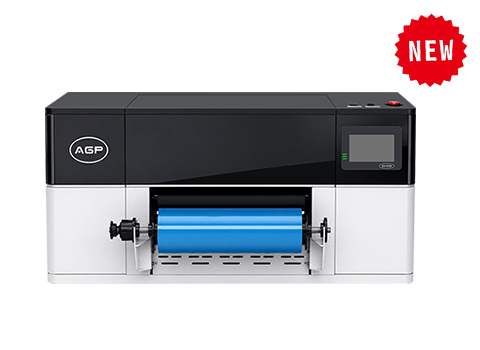
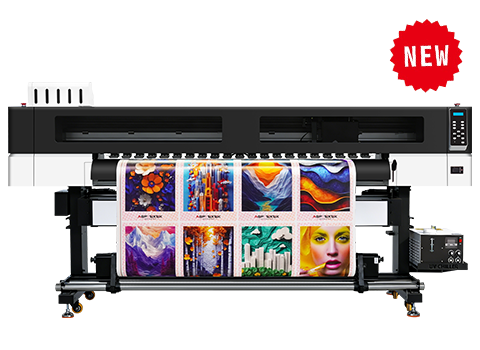
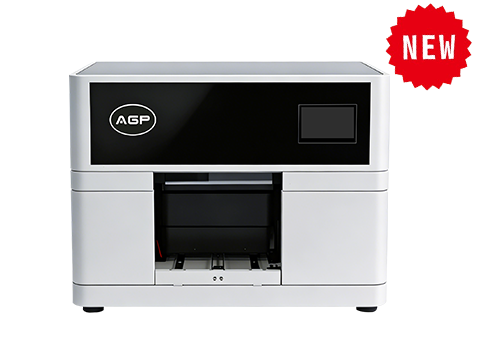
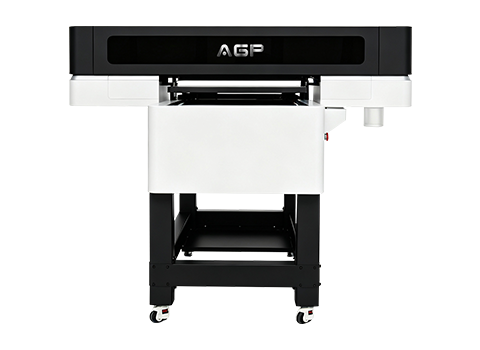
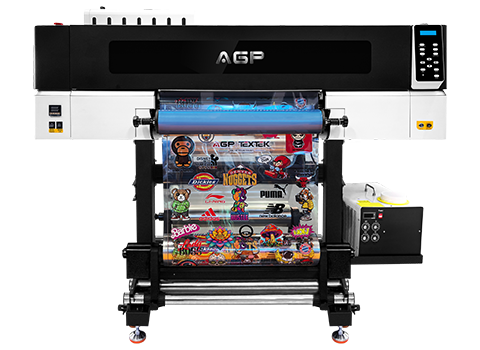
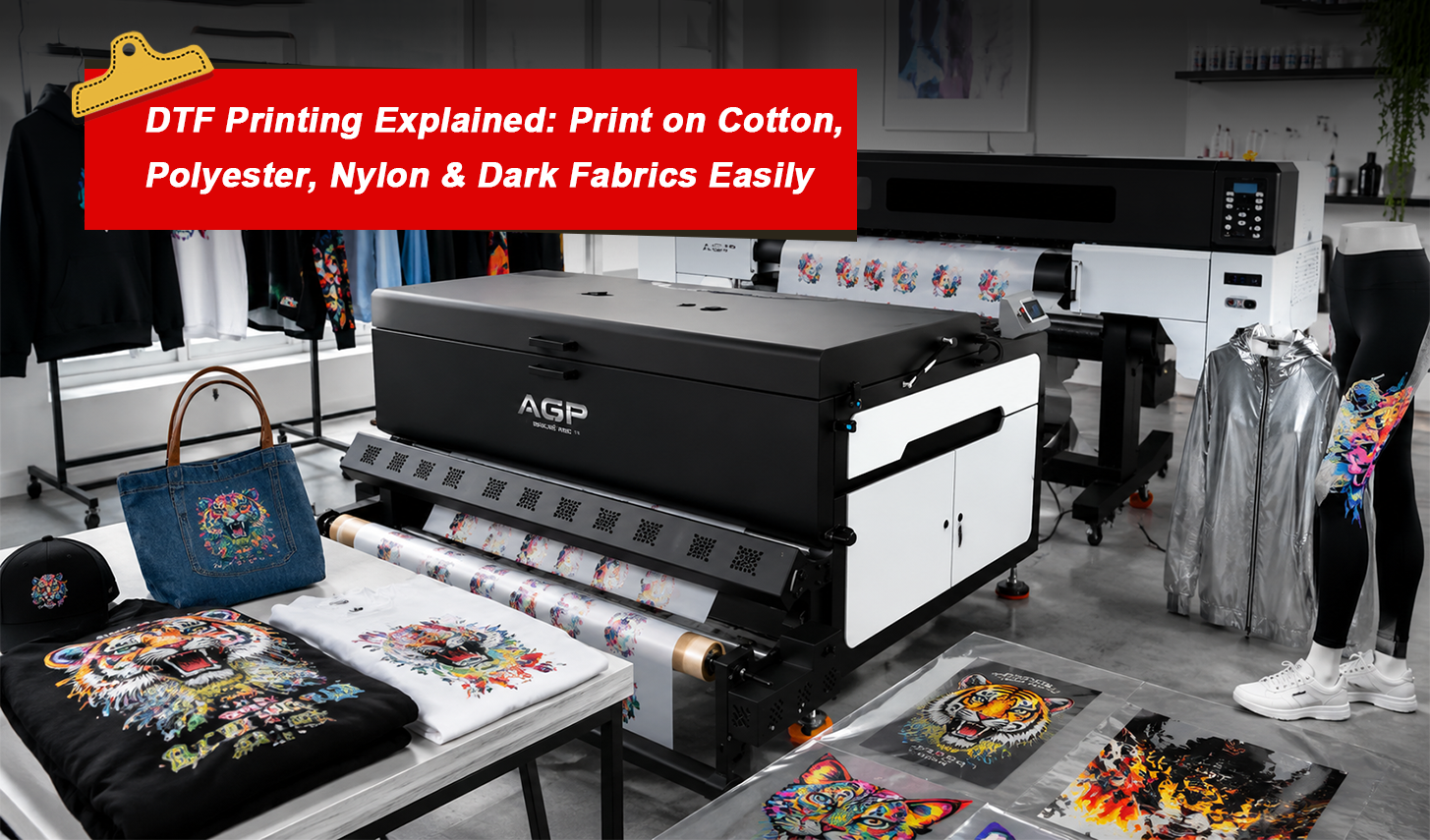
With an AGP DTF printer, you can print on:
- Cotton
- Polyester
- Poly-cotton blends
- Nylon
- Canvas
- Denim
- Leather
- Spandex
- Sportswear fabrics
- Dark garments
- Light garments
All with one printing solution.
That level of flexibility is one reason why DTF transfer printing has become one of the fastest-growing technologies in the textile printing industry.
For print shops, startup apparel brands, and print-on-demand businesses, it means fewer limitations and more product opportunities.
Why AGP DTF Printers Deliver Better Color Performance
Color matters in custom apparel printing.
Customers want vibrant graphics, deep blacks, smooth gradients, and sharp image details. Nobody wants faded prints that look cheap after one wash.
That’s where AGP DTF printing systems stand out.
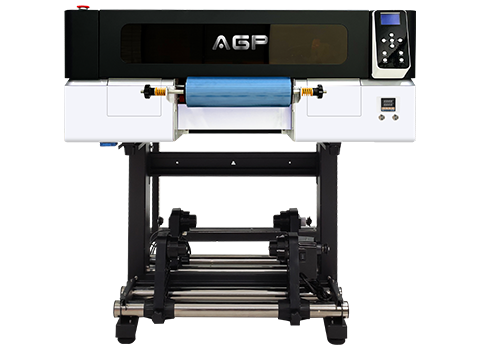
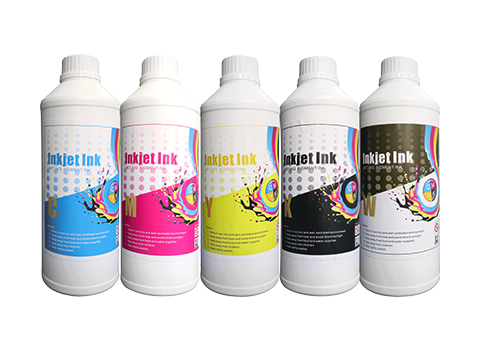
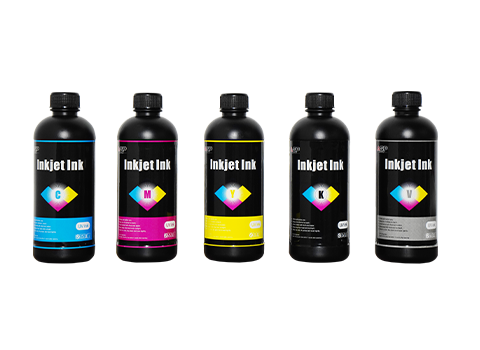
AGP DTF printers use professional CMYK + White ink configurations to produce highly saturated colors and strong opacity on both dark and light fabrics.
The white ink layer plays a huge role here.
It acts like a solid foundation underneath the artwork, allowing bright colors to remain vivid even on black polyester or dark cotton hoodies.
Combined with high-quality PET transfer film and precision printheads, the final result looks clean, sharp, and professional.
Even fine text, gradients, and complex graphics can be reproduced accurately.
Compared with traditional heat transfer vinyl or screen printing methods, DTF transfers offer:
- Better color vibrancy
- Higher resolution printing
- Softer hand feel
- Strong wash resistance
- Excellent stretch durability
- Faster production workflow
For apparel businesses, these advantages directly improve customer satisfaction and reduce reprint costs.
The Science Behind DTF Ink and PET Transfer Film
A lot of people think DTF printing is only about the printer.
Actually, the real magic comes from how the ink, PET film, adhesive powder, and heat transfer process work together.
DTF ink is specially developed for transfer applications. Unlike standard textile inks, it’s designed to remain stable on PET film before transferring onto fabric.
The PET transfer film also plays an important role.
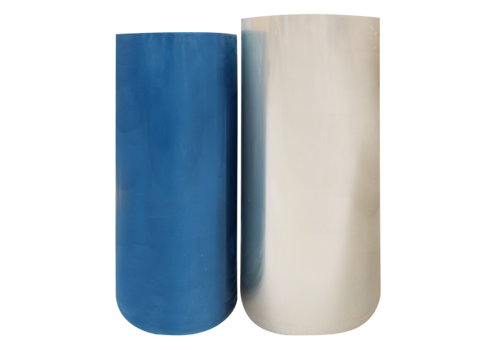
This film features a special coating layer that helps control ink absorption and keeps details sharp during printing. At the same time, it can withstand high curing temperatures without deforming.
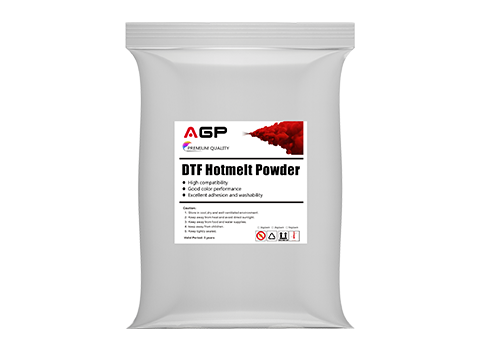
Then comes the hot melt adhesive powder.
When heated, the adhesive melts and creates a strong bond between the printed design and the fabric surface. That’s why DTF transfers maintain excellent durability after repeated washing and stretching.
This combination allows AGP DTF printing systems to produce transfers that are:
- Flexible
- Durable
- Highly opaque
- Crack-resistant
- Waterproof
- Stretch-resistant
For modern apparel decoration businesses, this reliability is extremely valuable.
What Fabrics Can DTF Transfers Work On?
This is probably one of the biggest reasons DTF printing became so popular so quickly.
Fabric compatibility.
Unlike sublimation printing, which mainly works on light polyester fabrics, DTF transfers support a much wider range of materials.
AGP DTF printers can handle:
Cotton Fabrics
Perfect for t-shirts, hoodies, sweatshirts, and casual apparel.
Polyester Fabrics
Ideal for sportswear, jerseys, performance clothing, and activewear.
Poly-Cotton Blends
Excellent for fashion brands looking for soft and comfortable apparel materials.
Nylon Materials
Suitable for jackets, bags, outdoor gear, and promotional products.
Stretch Fabrics
Works well on leggings, gym wear, and elastic sports garments.
Canvas and Denim
Great for tote bags, workwear, and lifestyle products.
This flexibility allows printing businesses to expand into multiple industries without investing in separate printing technologies.
That’s a huge advantage for startups and growing apparel brands.
Popular Industries Using DTF Printing Today
DTF printing is no longer limited to custom t-shirt businesses.
Today, many industries are using AGP DTF printing solutions because of their flexibility and production efficiency.
Some of the most popular applications include:
- Custom apparel printing
- Sportswear production
- Promotional product decoration
- Corporate uniforms
- School merchandise
- Fashion brands
- Workwear customization
- Print-on-demand businesses
- Personalized gifts
- Home textile decoration
Because DTF transfers can be prepared in advance and stored, businesses can also improve production speed during busy seasons.
That’s especially useful for online shops handling large order volumes.
Why Consistent Print Quality Matters for Your Business
Consistency is everything in garment printing.
Customers expect the second order to look exactly like the first one.
With traditional printing methods, changing fabric types often means changing print settings, adjusting pretreatment processes, or dealing with unexpected color differences.
DTF printing simplifies all of that.
Since the transfer process remains relatively consistent across different materials, businesses can achieve stable production results more easily.
That means:
- Less training time
- Faster workflow
- Fewer printing errors
- Lower material waste
- More reliable delivery schedules
And honestly, it also reduces stress for your production team.
When operators trust the process, production becomes smoother and more efficient.
That’s one reason more apparel businesses are investing in AGP DTF printers for long-term growth.
Final Thoughts
DTF printing has completely changed the custom apparel industry.
Instead of worrying about difficult fabrics, pretreatment problems, or color limitations, businesses can now produce vibrant and durable transfers on almost any material using one flexible printing system.
From cotton t-shirts and polyester sportswear to nylon bags and blended performance fabrics, AGP DTF printers provide a reliable solution for modern garment decoration.
For businesses that want faster production, wider material compatibility, and professional-quality printing results, DTF transfer technology is becoming the smart choice.
As the demand for personalized apparel continues growing, investing in AGP DTF printing solutions can help your business stay competitive, expand product offerings, and deliver consistent quality across every order.