
DTF Film Guide: PET Types, Cold Peel vs Hot Peel, Storage
DTF film is not blank plastic — it is a coated PET sheet whose coating decides whether the ink releases cleanly, and most "film problems" are actually coating or humidity problems. The film itself is cheap and predictable. What fails is the release layer, the moisture content, or the mismatch between the film's peel type and how you press it.
This guide covers what the film is, how cold and hot peel differ, what thickness changes, and the storage rules that prevent the two failures everyone hits: curling and tearing on peel.
Quick Action Plan: Three Things to Check First
- Peel type matches your workflow — cold peel for stretch fabrics and heavy white, hot peel for speed on standard cotton.
- Film is dry — humidity is absorbed by PET and causes powder adhesion problems and popping during cure.
- Coating side up — printing on the wrong side gives weak, patchy transfer with no obvious cause.
What DTF Film Is
| Layer | What it is | What it does | What fails |
|---|---|---|---|
| Base | PET film, typically 75–100 microns | Carries the print through the printer and the press | Curls if stored in humidity |
| Release coating | A thin release layer on one side | Lets the cured ink and adhesive transfer cleanly to fabric | Tearing, incomplete release, patchy transfer |
| Anti-static / slip treatment | Optional surface treatment | Feeds reliably, resists blocking on the roll | Misfeeds and double-feeds |
The release coating is where quality lives. Two films that look identical and cost differently are usually differing in coating uniformity — and a coating that releases unevenly produces a print that looks fine on the film and tears on the shirt.
Cold Peel vs Hot Peel
| Comparison | Cold peel | Hot peel |
|---|---|---|
| When you remove the film | After the transfer has cooled | Immediately, while still hot |
| Result on stretch fabric | Better — less distortion of the ink film | Higher risk of stretch marks and cracking |
| Result on heavy white | Better — white stays opaque and even | White can pull or thin |
| Speed | Slower — you wait | Faster — press, peel, next |
| Best for | Polyester, stretch knits, detailed work, heavy white | Cotton, high-volume simple graphics |
The rule that matters: cold peel gives a better print, hot peel gives a faster one. If your product is performancewear, fine detail or heavy white on dark, cold peel is not optional — hot peeling those jobs is the most common cause of a print that looks perfect at first and cracks after a week.
If you are running both, sort jobs by peel type rather than switching mid-batch. Switching mid-batch is how operators forget which is which.
Thickness: What the Micron Number Changes
| Thickness | Behaviour | Best for |
|---|---|---|
| Thinner (around 75 micron) | Softer hand, better drape, harder to handle — curls more | Fine detail, lightweight garments |
| Standard (around 100 micron) | Good balance of stiffness and handling | General production |
| Thicker | Very stable through the printer, more noticeable film edge | Heavy ink laydown, high-white designs |
Thinner is not automatically better. A very thin film with heavy ink deposits can distort during cure, and it is less forgiving in the printer's feed path. Most production shops standardise on one thickness and control quality through ink and powder settings rather than through film.
Speciality Films
Matte film produces a softer, less glossy finish after transfer — useful for vintage and garment-dyed looks, and often chosen when a customer wants the print to look less "applied".
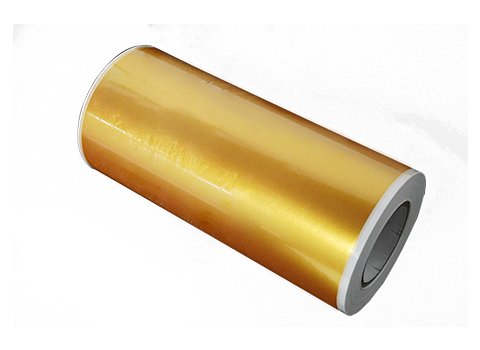
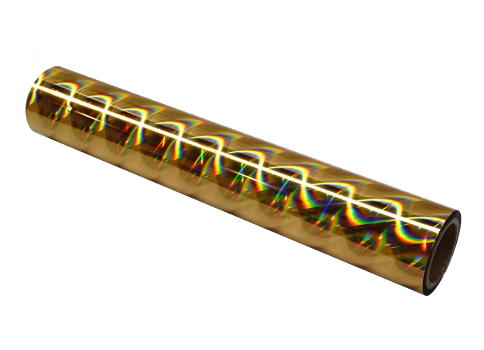
Metallic / silver film carries a metallic layer and is used for reflective and special-effect transfers. It is more sensitive to cure temperature and to press pressure; over-pressing dulls the effect.
UV DTF film (A/B) is a different product entirely and does not belong on a textile DTF machine. Film A receives UV ink, Film B supplies the adhesive, and the two are formulated as a pair. Mixing brands of A and B is the most common UV DTF failure — see our UV DTF guide.
The Two Failures Everyone Hits
1. Curling
Film curls because PET absorbs moisture unevenly, and because the release coating responds to humidity differently from the base. Curled film misfeeds, skews, and can strike the head.
Fix: store film sealed, in a dry place, at stable temperature. If a roll has already absorbed moisture, let it acclimatise sealed in the production room for 24 hours before use rather than fighting it through the feed path. Do not store film on a concrete floor or against an exterior wall.
2. Tearing on peel
The print tears because the ink has bonded to the shirt more strongly than it has released from the film — usually because the film was peeled too early, too fast, or at the wrong angle.
Fix: let cold-peel jobs cool fully; peel in one steady motion at a shallow angle, holding the garment flat. If tearing persists on a job that worked before, suspect the film batch or the humidity, not the press setting.
Storage Rules Worth Following
| Factor | Requirement | Why |
|---|---|---|
| Humidity | Sealed, dry storage | PET absorbs moisture; wet film causes powder adhesion problems and popping |
| Temperature | Stable, room temperature | Heat softens and can block the roll |
| Light | Out of direct sun | Coating degrades |
| Position | Roll standing or on a core, not leaning | Leaning distorts the edge and causes tracking problems |
| Rotation | Use oldest first | Coatings age; old stock releases less predictably |
A note on climate: shops in humid climates lose more film to moisture than to any other cause, and the symptom looks like a printer problem — patchy transfer, powder not sticking, popping sounds during cure. Before you adjust settings, dry the film.
Frequently Asked Questions (FAQ)
What is DTF film made of?
A PET base film, typically 75–100 microns, with a thin release coating on one side. The PET carries the print; the release coating lets the cured ink and powder transfer cleanly to the garment.
What is the difference between cold peel and hot peel DTF film?
Cold peel film is removed after the transfer cools, giving a better result on stretch fabrics, fine detail and heavy white. Hot peel film is removed immediately while hot, which is faster and suits cotton and high-volume simple graphics.
Why does my DTF film curl?
Moisture. PET absorbs water unevenly and the release coating responds differently from the base, so the sheet warps. Store sealed and dry, and let a roll acclimatise in the production room before use.
Can I use UV DTF film in a textile DTF printer?
No. UV DTF film is designed for UV-curable ink and comes as a pair — print film and adhesive film. Textile DTF uses heat and hot-melt powder. The two systems are not interchangeable.
Why does my print tear when I peel the film?
Usually because it was peeled too early or too fast. Cold-peel jobs need to cool fully before peeling, and the peel should be one steady motion at a shallow angle with the garment held flat. If a previously working job starts tearing, check film humidity and batch before changing press settings.
Get Film Recommendations for Your Press Routine
Tell us whether you cold peel or hot peel, what fabrics you print and how you store stock, and we will recommend the film type and thickness that match your workflow.
Ask for a Film Recommendation