

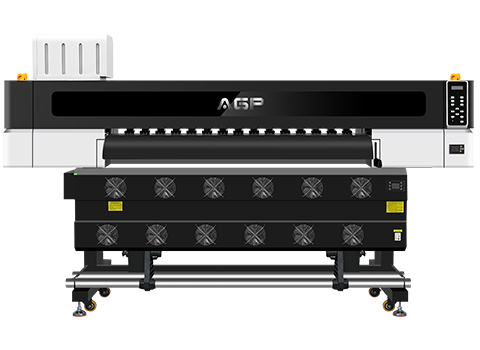
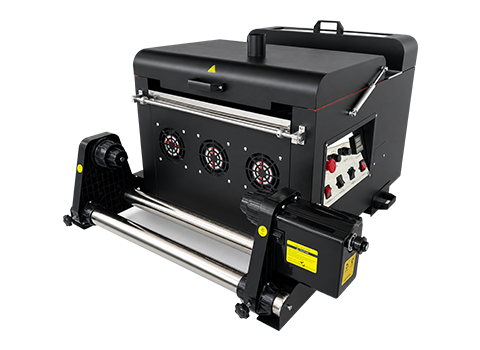
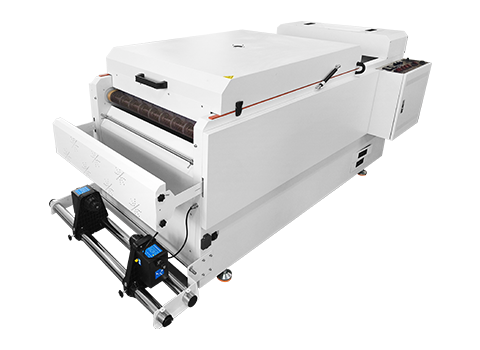
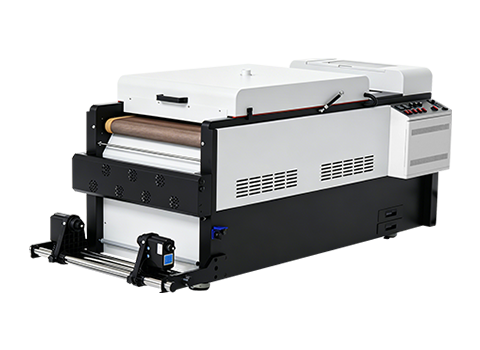
UV vs Sublimation vs Eco-Solvent: Which Process for Which Job
Three printing processes, and the choice between them is made by your substrate, not by your budget or your preference. Sublimation only works on polyester and specially coated blanks. UV works on almost anything rigid. Eco-solvent works on vinyl and banner and nothing else really well. Get the substrate wrong and no amount of skill or settings saves the job.
This page is a decision table, not an argument. Find your material, read the line, ignore the rest.
Quick Action Plan: Decide in Three Questions
- Is the substrate polyester fabric or a coated blank (mug, tumbler, puzzle)? → Sublimation. Nothing else bonds like it.
- Is it rigid, thick, or heat-sensitive — board, metal, glass, phone case, wood? → UV.
- Is it flexible vinyl, banner or vehicle film? → Eco-solvent.
The Decision Table
| Substrate | Best process | Second choice | Why |
|---|---|---|---|
| Polyester T-shirt / sportswear | Sublimation | DTF (blends only) | Dye bonds into the fibre — zero hand-feel, permanent |
| Cotton T-shirt | DTF | — | Sublimation does not bond to cotton |
| Coated mug / tumbler | Sublimation | UV DTF (wraps) | Coating exists precisely to accept sublimation dye |
| Rigid board / foam PVC | UV | — | Direct print, no transfer, instant cure |
| Metal panel / industrial plate | UV | — | With primer; sublimation needs a coated blank |
| Glass / acrylic | UV | — | Primer for glass; acrylic accepts directly |
| Vehicle wrap / banner | Eco-solvent | UV roll-to-roll | Flexible vinyl needs a flexible ink film |
| Phone case (plastic) | UV | UV DTF | Thin substrate, full colour, no heat |
| Bottle / helmet / curved object | UV DTF | — | Neither flatbed nor roll can wrap a curve |
| Wood (sealed) | UV | — | Direct, durable, no transfer step |
| Small run of 1–50 mixed items | UV (flatbed or DTF) | — | No setup cost; sublimation needs blanks in stock |
How Each One Actually Bonds
Sublimation turns solid dye into gas at around 200°C. The gas penetrates polyester fibres and re-solidifies inside them. Nothing sits on the surface — that is why sublimated polyester has no hand-feel at all and cannot crack or peel. The constraint follows directly: if the material is not polyester or polymer-coated, there is nothing for the gas to enter. Cotton, glass, metal and untreated plastic are excluded by physics, not by product quality.
UV jets pigment ink and cures it instantly with ultraviolet light. The ink sits on the surface as a hard film. It bonds mechanically, which is why surface preparation — primer, cleaning — matters so much, and why a scratch test tells you more than a datasheet.
Eco-solvent uses a mild solvent carrier that softens the vinyl surface slightly, letting pigment anchor into it. The solvent then evaporates. It needs a vinyl or coated substrate with something to bite into; on rigid board or glass it produces a weak film that fails under abrasion.
Where the Cost Actually Sits
Absolute figures age badly, so compare by which line dominates rather than by number:
| Process | Ink per m² | Media per m² | Setup per job | Dominant cost | Best economic range |
|---|---|---|---|---|---|
| Sublimation | Low | Low (paper) — but the blank is not | Low | The blank itself | 50+ identical pieces |
| UV | High (white & varnish double it) | Zero on rigid; moderate on roll | None | Ink plus primer | 1–500 pieces |
| Eco-solvent | Moderate | High (vinyl is the product) | Low | The media | 20+ m² runs |
Read the table with the constraint in mind: sublimation's real cost is the blank — a coated mug costs more than the printing on it. UV's real cost is ink and primer. Eco-solvent's real cost is the vinyl.
Where Each Process Fails
Sublimation fails on: cotton, dark polyester without a white underlayer, glass, metal, untreated plastic, and anything above the press's platen size. It also cannot produce white — the substrate's own colour shows through, so light-coloured blanks only.
UV fails on: flexible materials that will be flexed, deep curves, low-surface-energy plastics, and any job requiring food contact or dishwasher cycles. It is also the slowest of the three per square metre on large areas.
Eco-solvent fails on: rigid substrates, anything needing abrasion resistance, and indoor applications where solvent odour during production is a problem. It also needs outgassing time before lamination.
The Combination Most Shops End Up With
In practice, shops rarely choose one. The common pairing is DTF plus sublimation: DTF covers cotton and blends, sublimation covers polyester and coated blanks, and between them nearly every apparel job is covered. Add UV flatbed only when rigid objects become a real revenue line, because it is a different customer and a different sales conversation.
The mistake is buying UV "because it is the most versatile" before having rigid-object customers. Versatility you do not use is cost, not capability.
Frequently Asked Questions (FAQ)
Is UV printing better than sublimation?
Neither is better — they cover different substrates. Sublimation is superior on polyester and coated blanks because the dye bonds inside the material and cannot be felt or peeled. UV is superior on rigid, thick and heat-sensitive objects where sublimation cannot bond at all.
Can UV print on polyester fabric?
It can print on it, but the result is a stiff film on the surface that cracks when stretched. For apparel, sublimation or DTF is the correct process. UV on fabric is only sensible for rigid display textiles that will not flex.
Which is cheaper, UV or eco-solvent?
Eco-solvent is cheaper per square metre for large flexible graphics and the machines cost less. UV is cheaper for short runs of rigid objects because there is no media and no transfer step. The crossover is roughly: flexible and large → eco-solvent; rigid and small-run → UV.
Do I need different RIP software for each process?
Usually yes, or at least different profiles and licence seats. RIP software is process- and ink-specific; a profile built for eco-solvent on vinyl will not produce correct colour on a UV flatbed. Budget for it as a separate line item.
Can one machine do both UV and sublimation?
Some hybrid machines offer swap-in ink sets, and they work, but each mode compromises the other: switching takes time, and output rarely matches a dedicated machine. If both processes are core to your business, two machines is the honest answer.
Match the Process to What You Actually Sell
Tell us your top three products and the materials they are made from. We will tell you which process each one needs — and if the answer is sublimation rather than anything we build, we will say so.
Get a Process Recommendation for Your Products