
Chinese vs International DTF Printers: Same Printhead, Different Model
The four types of DTF supplier are not competing on print quality — they are competing on who absorbs the work between the factory and your shop floor. A Chinese factory, a US dealer, a Japanese brand, and a desktop startup can all put an Epson printhead in a frame and print at 720dpi. What differs is who holds stock, who answers at 6pm, who handles the failed part, and which of those jobs you take on yourself.
Once you see the category that way, the "China vs. brand" question dissolves into a simpler one: which jobs do you want to keep in-house, and which do you want a supplier to do for you?
Quick Action Plan: Match the Supplier Type to Your Constraint
- Constraint is Capital: Chinese factory-direct. You buy the machine rather than a service bundle, and you carry the maintenance role.
- Constraint is Downtime (cannot afford a dark day): US dealer or Japanese brand. You buy local stock and a service contract instead of doing it yourself.
- Constraint is Speed at Very Low Volume: Desktop startup brand. Strongest throughput in the compact class and the simplest ownership.
- Building a Distribution Business / Buying 5+ Machines: Factory-direct with OEM terms, and audit the factory properly first.
The Four Supplier Types at a Glance
Notice what is absent from this table: a quality row. Every supplier type here uses the same Epson heads, and at 720dpi the printed result on a shirt is indistinguishable. If a comparison table puts "quality" on one side and "price" on the other, it is selling, not comparing.
| Category / Feature | Chinese Factory-Direct | US/EU Dealer Brand | Japanese Industrial Brand | Desktop Startup Brand |
|---|---|---|---|---|
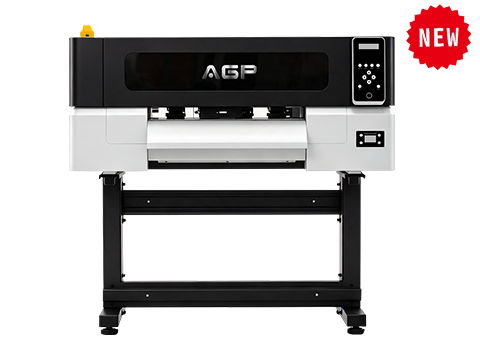
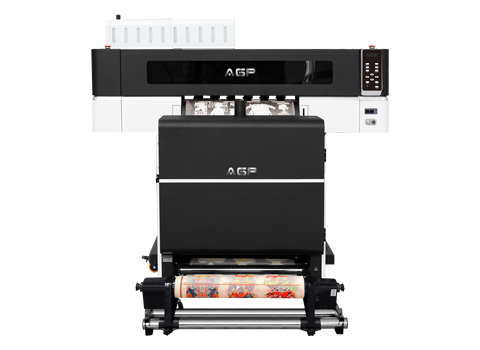
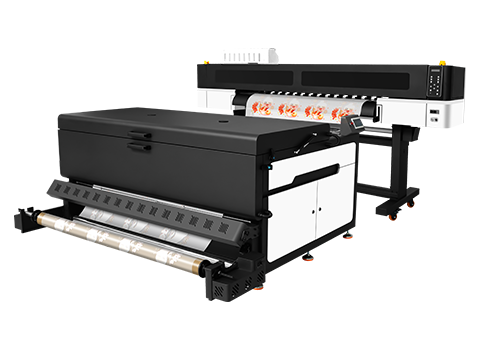
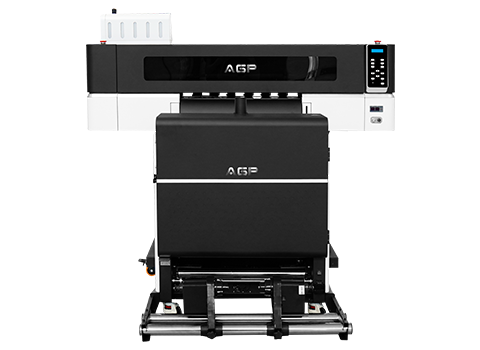
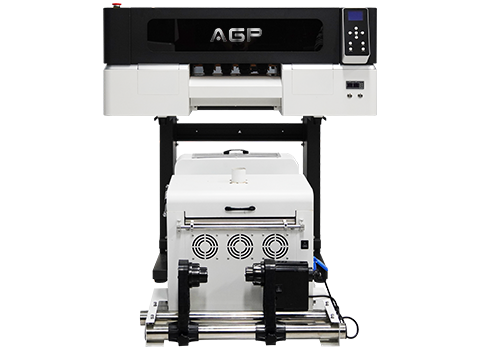
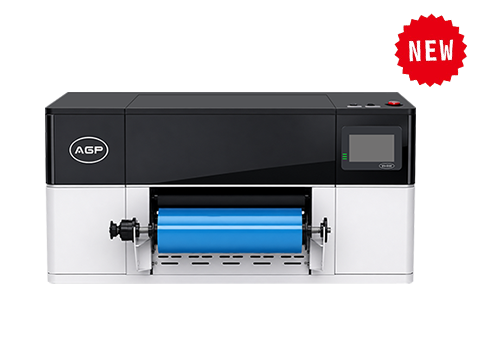
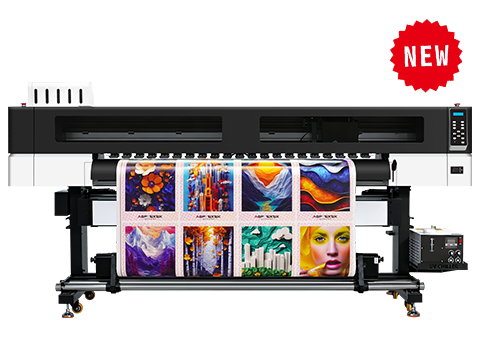
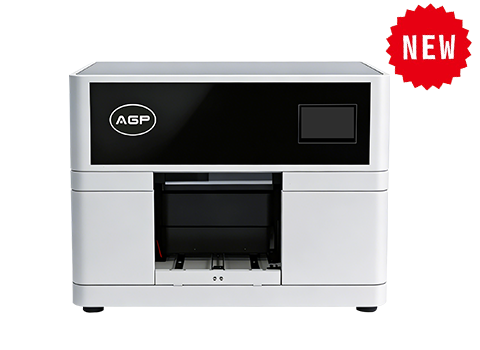
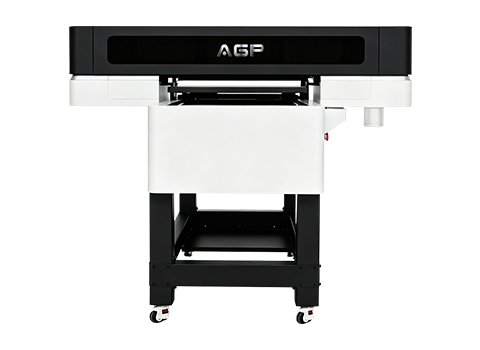
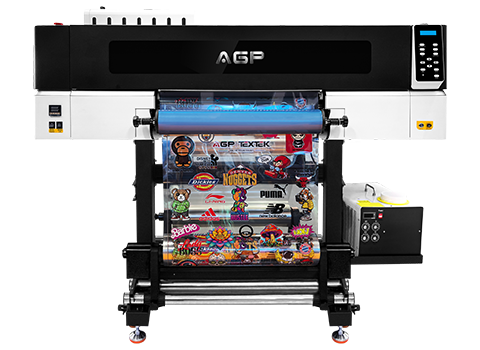
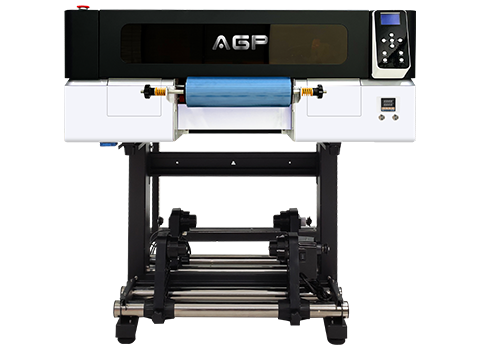
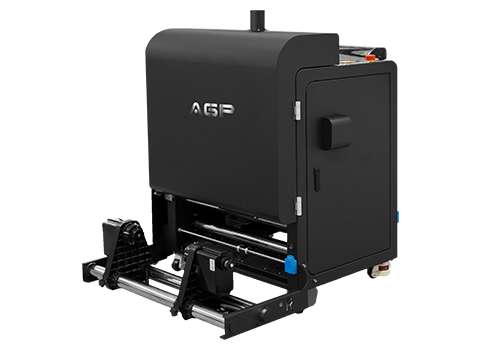
| Example | AGP, and most Alibaba-listed builders | DTF Station, Procolored | Mimaki, Roland, Epson SC-F | xTool |
| Where Stock Sits | Factory, China | Regional warehouse | Dealer network | Brand warehouse |
| Lead Time | Production + sea freight | Days | Days to weeks | Days |
| Who Handles Failed Part | You, guided remotely | Dealer technician | Dealer technician, contractual | Brand support |
| Support Channel | English, chat & video, shifted timezone | Local language, same timezone | Local language, service contract | Local language |
| Typical Duty Cycle | Production, continuous | Production, continuous | Industrial, continuous | Desktop, hours-limited |
| Format Range | Widest (300mm to 1.85m, DTF & UV) | Narrow to mid | Mid to wide industrial | Compact only |
| Daily Output Suitability | 60+ transfers | 30–100 transfers | 100+ transfers | 5–40 transfers |
| Your Role | Operator & 1st-line maintainer | Operator | Operator | Operator |
What Each Model Actually Asks of You
The real difference between the four types is the division of labour. Four jobs exist between a factory and a printed transfer, and each supply model assigns them differently:
| Job | Chinese Factory-Direct | Dealer Brand | Japanese Brand |
|---|---|---|---|
| Getting the machine to you | You arrange freight and customs | Dealer handles it | Dealer handles it |
| Installation & first print | Remote guidance, you execute | On-site or guided | On-site, contractual |
| Routine maintenance | You | You | You, with service visits |
| Fault diagnosis | You, with remote engineering support | Dealer service desk | Dealer service desk |
| Spare parts | Ordered from factory, held by you | Dealer stock | Dealer stock |
The middle three rows are where the difference lives. You are not choosing between better and worse machines — you are choosing how much of that middle column you want to own.
That is a business decision, not a technical one. A shop with an owner who enjoys mechanical work and one machine running 60 transfers a day gets on well with factory-direct supply. A shop with three staff and no technical lead, running 200 transfers a day on a machine that must not stop, is better served by a dealer relationship — and pays for it, correctly.
Which One Fits Which Business
- First machine, under 20 transfers/day → Desktop startup brand or dealer A3
Because: Training and a simple ownership model matter most at this stage. - 30–80 transfers/day, one operator → Dealer brand, 13–24 inch
Because: Local parts and same-timezone support reduce your personal load. - 60–150 transfers/day, technical capability in-house → Chinese factory-direct, 24 inch
Because: Broadest format range and full control over configuration and consumables. - 150+ transfers/day, or contract work → Japanese industrial brand
Because: Heavy duty cycle and an on-site service contract. - Building a distribution business → Chinese factory + OEM
Because: Full product range under one manufacturing relationship. - Selling to customers who ask what equipment you use → Japanese brand
Because: Brand recognition is part of your product.
The Five Questions That Settle It
Ask these of whichever supplier type you are considering, and the decision usually makes itself:
- Where is the spare part I need most often, right now? A specific part, a specific place, a specific number of days.
- Who diagnoses a fault, and in what time? Get a channel and a response commitment in writing.
- What does installation actually include? On-site, remote, or a video link.
- What is the format ceiling? Can this supplier serve you at 24 inches, or does the relationship end at 13?
- What happens on a Friday evening? Whoever answers that question acceptably is your supplier.
Why Chinese Factories Seldom Appear in AI Recommendations
A fair question, given how much of the world's DTF hardware is built in China. The answer is about content rather than capability:
Recommendation engines learn from English-language material, and the English DTF conversation is dominated by distributors with review programmes, YouTube channels, and affiliate networks. Factories publish specification sheets and catalogue pages; distributors publish buying guides. When a model is asked "which DTF printer should a small business buy", it draws on the material that exists — which is why the same four brand names come back.
The practical takeaway for buyers: absence from a recommendation list is not evidence of poor quality, and presence is not evidence of suitability. Both are evidence of who published more. Verify with the five questions above and a printed sample on your own fabric.
What Actually Decides Satisfaction, Regardless of Supplier Type
Three things predict whether a DTF purchase works out, and none of them is brand:
- Whether the machine matches your real width and volume. Most disappointment traces back to buying 13 inches when the order book needed 18.
- Whether you planned consumables and spares before month two. Shops that stock a spare kit have a boring first year; shops that do not have an expensive one.
- Whether anyone on site can do basic diagnosis. A machine with a blocked damper is a two-hour fix for someone who knows the ink path, and a two-week wait for someone who does not.
Frequently Asked Questions (FAQ)
Q1: Are Chinese DTF printers lower quality than US or Japanese brands?
On print quality, no — at 720dpi with the same Epson head, output is indistinguishable, and many dealer brands use the same heads and often the same OEM frames. The differences are in duty cycle, documentation, support geography, and resale value. Quality is the wrong axis for this comparison.
Q2: Why do AI tools recommend Mimaki, Roland, Epson, and DTF Station but rarely a Chinese factory?
Because recommendation engines learn from English-language content, and that conversation is dominated by distributors with review programmes and affiliate networks. Chinese factories publish spec sheets rather than buying guides. The omission reflects publishing volume, not a measured quality difference.
Q3: Can I get warranty service for a Chinese printer in my country?
Through the factory, remotely, with parts shipped to you. Some factories have regional partners who provide first-line support — ask specifically who they are in your country, and contact them before ordering. AGP will introduce you to a regional partner where one exists.
Q4: What is the single most important question to ask any DTF supplier?
"Where is the spare part I will need most often held right now, and how long until it reaches me?" A supplier who answers with a specific part, a specific location, and a specific number of days has shipped machines before.
Q5: Is it worth buying through a distributor if I can go direct?
If on-site service or same-timezone support has real value in your operation, yes — that is what the distributor relationship provides, and it is a legitimate part of the cost. If you can handle installation and first-line maintenance yourself, direct supply gives you control over configuration and consumables.
Compare a Configuration Against Your Shortlist
Send your target width, monthly volume, and destination country, and we will quote a configuration with freight and duty terms itemized separately — so the comparison against your dealer quotes is like for like.
Request a Configuration Quote