
UV DTF vs DTF: Which Printing Method Should You Choose in 2026?
Quick Answer:DTF (Direct-to-Film) printing uses water-based pigment ink, hot-melt adhesive powder, and a heat press to bond designs onto fabric — making it the right choice for T-shirts, hoodies, and other soft goods. UV DTF printing uses UV-curable ink that hardens instantly under LED lamps, then laminates onto an A-B film that can be cold-applied by hand to hard, rigid surfaces like glass, metal, acrylic, and tumblers. UV DTF is not a fabric printing method — its rigid ink layer will crack under the flexing and washing that garments go through. If your business is apparel-focused, choose DTF. If you're printing on hard or curved substrates, choose UV DTF. Many shops eventually run both.
DTF and UV DTF share a name and a similar "print, then transfer" workflow, which is exactly why so many buyers confuse them. In practice, they use different inks, different films, different curing methods, and — most importantly — they're built for two completely different sets of materials. Getting this wrong before you invest in equipment is one of the most common (and expensive) mistakes new print shops make. Here's a full breakdown of how each technology actually works, where each one excels, and how to decide which one your business needs.
What Is DTF Printing?
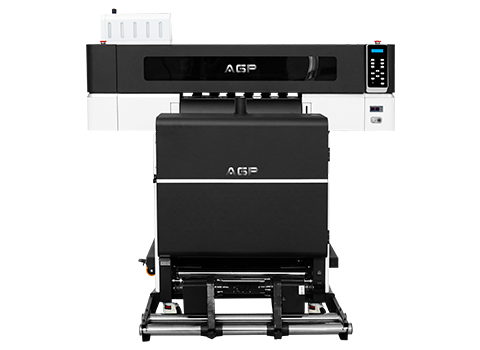
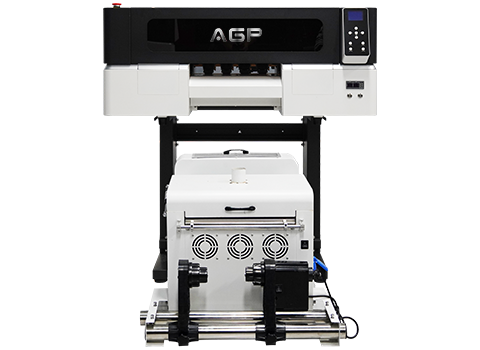
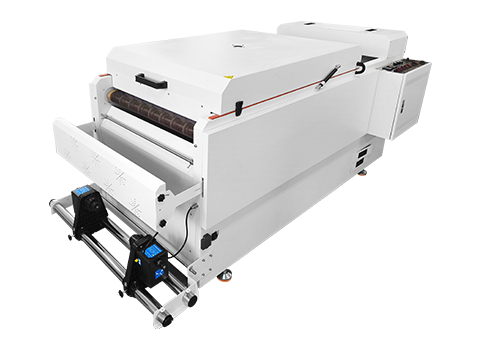
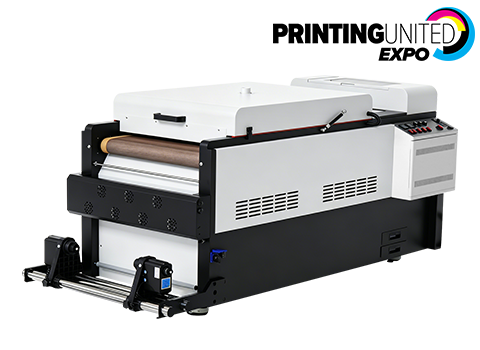
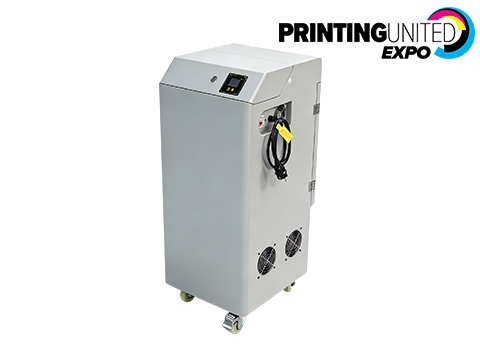
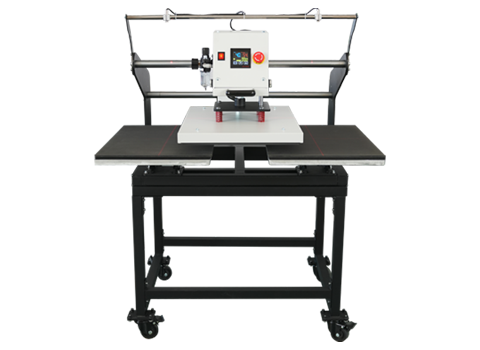
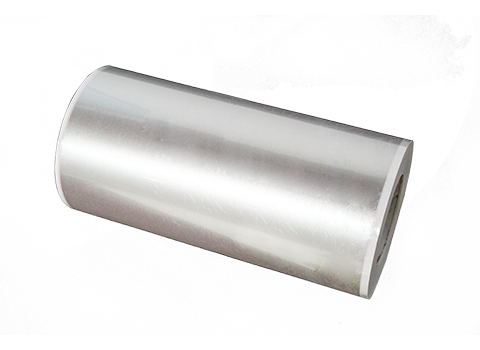
DTF (Direct-to-Film) printing prints a design onto a PET transfer film using CMYK and white pigment ink. While the ink is still wet, hot-melt adhesive powder is applied over the design and cured in an oven or with a curing oven. The finished transfer is then placed face-down on a garment and bonded permanently with a heat press. Once the film peels away, the design becomes part of the fabric's surface — soft, flexible, and machine-washable.
Best for: T-shirts, hoodies, sportswear, bags, and any soft, flexible textile — including cotton, polyester, blends, and dark-colored garments.
What Is UV DTF Printing?
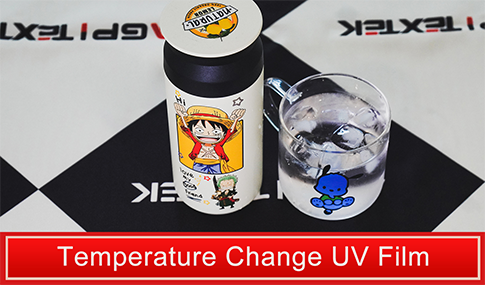
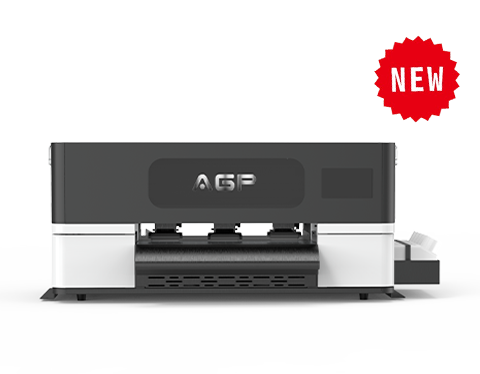
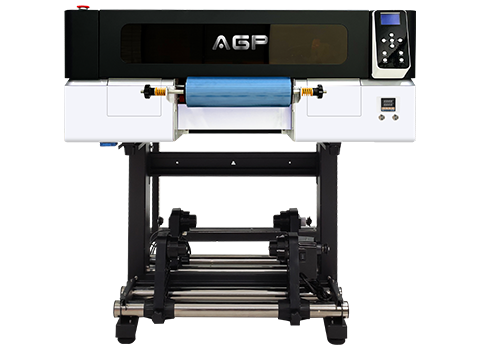
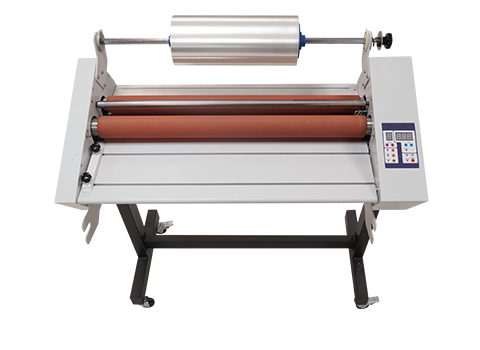
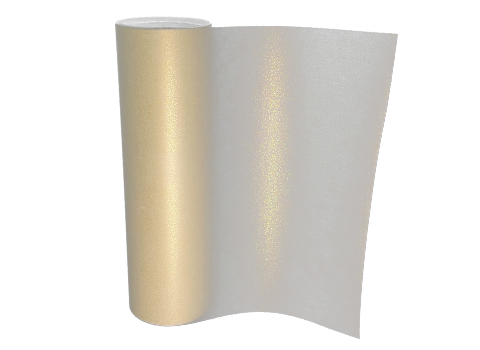
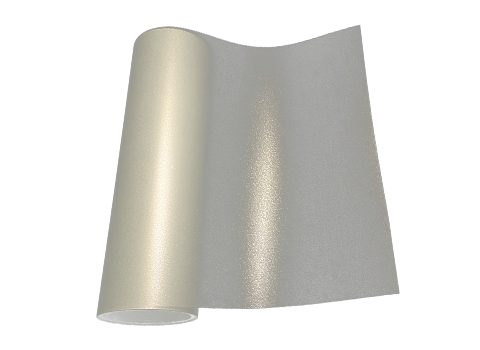
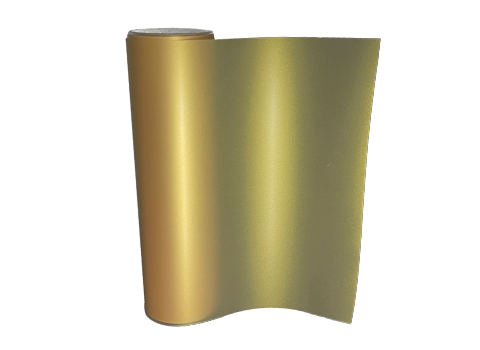
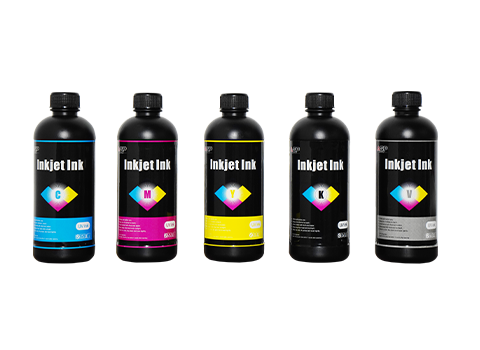
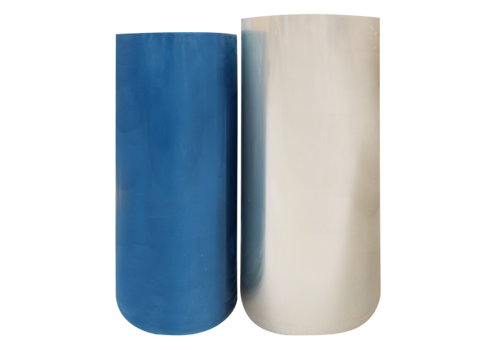
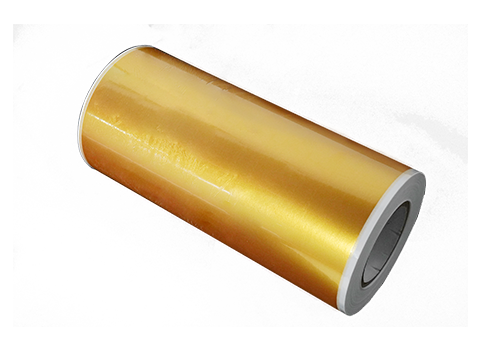
UV DTF printing prints CMYK, white, and sometimes varnish/gloss ink onto an "A film" using UV-curable inks. Built-in UV LED lamps cure the ink instantly as it's printed — no oven, no powder. The cured A film is then bonded to a transparent "B film" using a cold laminator, producing a ready-to-apply sticker-like transfer. Application requires only hand pressure to peel and press — no heat press needed — which is why UV DTF transfers are sometimes called "UV DTF stickers."
Best for: glass, metal, acrylic, ceramic, phone cases, tumblers, signage, and other hard or rigid, non-porous surfaces.
DTF vs UV DTF: How the Process Differs
| Step | DTF | UV DTF |
|---|---|---|
| Ink type | Water-based pigment ink | UV-curable ink |
| Film used | Single PET transfer film | Two-layer A film + B film |
| Curing method | Adhesive powder + oven curing | Instant UV LED curing while printing |
| Adhesive | Hot-melt adhesive powder | Built into the laminated film layer |
| Application method | Heat press (high temperature/pressure) | Cold, hand-pressed peel-and-stick |
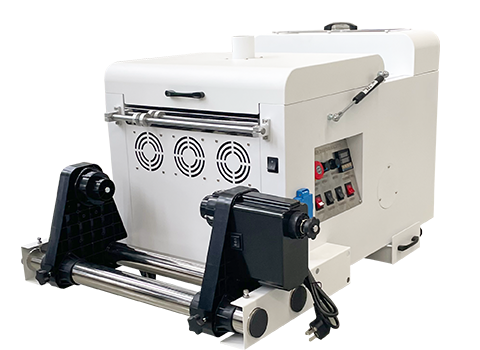
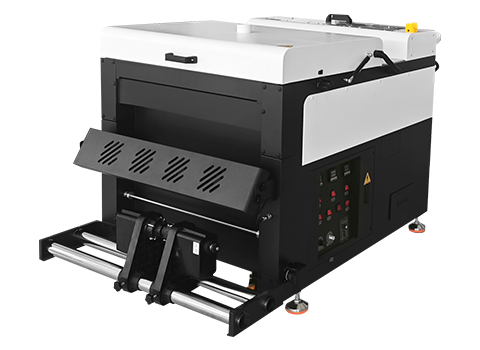
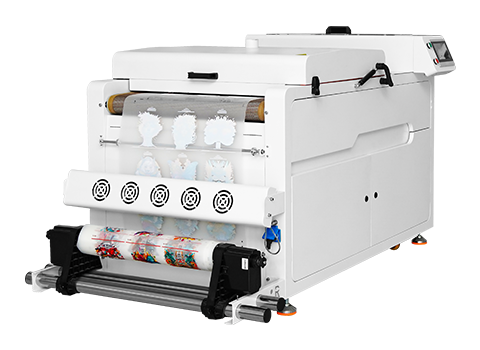
| Extra equipment needed | Powder shaker, curing oven, heat press | Laminator |
Which Materials Does Each Method Work Best On?
This is the single biggest factor in choosing between the two. DTF is built for fabric — the adhesive layer needs to flex with the material as it stretches, folds, and gets washed. UV DTF is built for rigid, non-porous surfaces — glass, metal, acrylic, wood, plastic, and similarly hard items where the transfer sits flat and doesn't need to flex. UV DTF can also handle slightly curved surfaces (like tumblers and bottles) far better than DTF, since it doesn't require a flat heat press platen.
Can UV DTF Be Used on Fabric?
Not effectively. UV-cured ink hardens into a rigid resin layer that doesn't flex the way DTF's adhesive layer does. On a garment that stretches and gets washed repeatedly, a UV DTF transfer will crack and peel far faster than a proper DTF print. If your business is centered on apparel, UV DTF is not a substitute for DTF — the two methods solve different problems.
Which Produces More Durable Results?
Durability depends entirely on the surface. On fabric, DTF wins — its flexible adhesive layer resists cracking through repeated washing and stretching. On hard goods, UV DTF wins — the cured, laminated film resists scratching, UV fading, and moisture far better than any fabric-oriented method, making it suitable for outdoor signage and items that get handled often, like phone cases and tumblers.
Which Has Lower Equipment and Startup Costs?
Both methods need a purpose-built printer plus one extra machine. A DTF setup requires a DTF printer, a powder shaker, a curing oven, and a heat press. A UV DTF setup requires a UV DTF printer and a laminator — generally a simpler workflow with fewer machines, though UV DTF printers and UV-curable ink typically carry a higher per-unit cost than standard DTF consumables. For apparel-focused businesses, DTF remains the lower-cost path to volume production; for hard-goods and gift/personalization shops, UV DTF's simpler workflow often offsets the higher equipment cost.
DTF vs UV DTF at a Glance
| Factor | DTF | UV DTF |
|---|---|---|
| Best surface | Fabric & soft goods | Hard, rigid, or curved surfaces |
| Ink | Water-based pigment ink | UV-curable ink |
| Curing | Powder + oven heat | Instant UV LED light |
| Application | Heat press required | Cold, peel-and-stick by hand |
| Flexibility of finished print | Soft and flexible | Rigid, glossy finish |
| Typical products | T-shirts, hoodies, bags, sportswear | Tumblers, phone cases, signage, glass, metal |
| Washable on garments | Yes | Not recommended |
Which Should You Choose?
Choose DTF if your business is built around apparel — T-shirts, hoodies, uniforms, or any garment decoration where softness and wash durability matter.
Choose UV DTF if you're targeting hard-goods personalization — tumblers, phone cases, signage, car decals, or promotional items — where instant cold application and rigid-surface durability matter more than fabric flexibility.
Neither method is a universal replacement for the other; they're built to solve different production problems.
Can You Run Both DTF and UV DTF in the Same Shop?
Yes — and it's an increasingly common setup. Running DTF for apparel orders alongside UV DTF for hard-goods and personalized gift orders lets a single shop cover both markets without turning away business. Since a UV DTF printer, laminator, DTF printer, powder shaker, and heat press are all separate, compact machines, many small-to-medium shops add UV DTF as a second production line once their apparel side is established.
Conclusion: Match the Technology to the Material
The DTF-vs-UV-DTF decision isn't about which technology is "better" — it's about which surface you're printing on. DTF remains the right tool for garments and soft goods; UV DTF is the right tool for glass, metal, acrylic, and other rigid substrates. AGP manufactures both DTF printers and UV printers, along with the full supporting lineup — powder shakers, curing ovens, heat presses, laminators, and UV DTF film — so you can build the right production line for your product mix, or expand into both markets from one supplier. Contact our team to find the right equipment for your business.
FAQ: UV DTF vs DTF Questions
Is UV DTF the same as DTF?
No. They share a similar "print then transfer" concept, but use different inks, films, curing methods, and are designed for different materials — DTF for fabric, UV DTF for hard surfaces.
Can I use UV DTF film on a T-shirt?
It's not recommended. UV DTF's cured ink layer is rigid and will crack under the stretching and washing that garments go through. Use standard DTF for apparel instead.
Does UV DTF need a heat press?
No. UV DTF transfers are applied cold, by hand pressure alone, which is one of its main advantages over DTF for on-the-spot personalization.
Which is more durable, DTF or UV DTF?
It depends on the surface. DTF is more durable on fabric because it flexes with the garment. UV DTF is more durable on hard surfaces because its cured, laminated layer resists scratching and moisture.
Is UV DTF printing profitable for a small business?
Yes — UV DTF is popular for personalized gifts, tumblers, and phone cases because the equipment list is short (printer + laminator) and transfers can be applied instantly without a heat press, enabling fast, on-demand fulfillment.
Do I need different printers for DTF and UV DTF?
Yes. DTF printers use water-based pigment ink and are paired with a powder shaker and curing oven, while UV DTF printers use UV-curable ink and built-in LED curing lamps — the two are not interchangeable machines.
Should my shop offer both DTF and UV DTF?
Many shops do. Offering DTF for apparel and UV DTF for hard-goods and personalized gifts lets one business serve both markets without compromising quality on either side.