
DTF vs HTV: Which Printing Method Is Better in 2026?
Published: Jul 16, 2026 | By AGP Printer Technical Team
Quick answer: DTF (Direct-to-Film) wins for full-color and photo-detail designs, works on cotton, polyester, and blends without extra steps, needs no cutting or weeding, and generally holds up longer through washing. HTV (Heat Transfer Vinyl) wins for simple one- or two-color text and logos, ultra-low startup budgets (a few hundred dollars vs. DTF's $1,500+), and specialty finishes like glitter, holographic, or puff that DTF can't replicate. Neither one is universally "better" — most growing shops eventually run both, using HTV for simple jobs and specialty effects, and DTF for everything full-color and detailed.
- Choose DTF if: your designs are full-color, detailed, or photographic, or you're scaling past occasional one-off orders.
- Choose HTV if: you're doing simple one-color text/logos, starting on a near-zero budget, or need glitter/holographic/puff finishes.
- Durability: HTV commonly shows edge-lifting around wash 25-30; well-pressed DTF typically holds through 35-50+ washes.
- Best of both: layer specialty HTV as a textured base, then press a DTF transfer on top for full-color detail.
What's the Difference Between DTF and HTV Printing?
HTV (Heat Transfer Vinyl) starts as a solid sheet of colored vinyl. A cutting machine (like a Cricut, Silhouette, or a larger commercial cutter) slices the design shape out of the vinyl, and everything that isn't part of the design has to be manually peeled away — a step called "weeding." The remaining design is then pressed onto the garment with heat, and a carrier sheet is peeled off. Multi-color designs require cutting, weeding, and layering a separate piece of vinyl for each color.
DTF (Direct-to-Film) works the opposite way. A printer lays down full-color CMYK-plus-white ink directly onto a PET film in a single pass — no cutting, no weeding, no color limit. Adhesive powder is applied and cured onto the printed ink, and the finished transfer is pressed onto the garment as one piece. The design complexity has almost no effect on production time, since a photographic gradient prints just as fast as a single-color logo.
Which Lasts Longer: DTF or HTV After Washing?
Durability is where DTF has built its reputation. Across independent wash tests published by printer manufacturers and apparel decorators, the pattern is consistent: HTV tends to show edge-lifting earlier, while properly pressed DTF holds on longer.
| Method | Typical Wash Life | Common Failure Mode |
|---|---|---|
| HTV | ~25-30 washes before edge-lifting is common | Corner/edge lifting, cracking on flexed areas |
| DTF (properly pressed) | ~35-50+ washes typical; some tests report 50-100+ | Gradual dulling if under-cured or under-pressed |
Note: figures reflect general ranges reported across multiple independent wash tests and manufacturer data as of 2026. Actual results depend heavily on film/vinyl quality, press temperature and time, and whether a second press was used — both methods perform worse with rushed application.
Which Costs Less: DTF or HTV?
The honest answer is: it depends on what stage your business is at. HTV wins on startup cost; DTF usually wins on cost-per-unit once you're past occasional one-off orders.
| Cost Factor | HTV | DTF |
|---|---|---|
| Starter equipment cost | A few hundred dollars (cutter + basic press) | ~$1,500+ for entry-level A3 setup; $5,000-$8,000+ for production-grade |
| Per-design material cost | ~$0.50-$2 (rises fast with each added color) | ~$2-$5 (flat regardless of color count) |
| Labor per piece | Higher — manual cutting & weeding scales with complexity | Lower — no weeding step regardless of design |
| Best economics at | Low volume, 1-2 colors, small batches | Full-color designs, growing/repeat volume |
Which Is Faster for High-Volume Orders?
DTF, decisively, once volume climbs. HTV's bottleneck isn't the heat press — it's the manual cutting and weeding step before that, which scales directly with design complexity and doesn't get faster no matter how experienced the operator is. A single-operator HTV shop typically tops out somewhere in the low hundreds of pieces per day, and that number drops fast as designs get more detailed.
DTF removes the weeding step entirely. A printed and cured transfer presses in under a minute regardless of how many colors or how much detail the design has, so throughput scales with your printer and press capacity rather than a person's cutting speed — which is why most shops that outgrow HTV move to DTF for full-color work, not the other way around.
Can You Combine DTF and HTV on the Same Garment?
Yes — and many established shops do exactly this rather than picking one method exclusively. A common hybrid technique presses a layer of specialty HTV (glitter, puff, or holographic vinyl) as a textured base, then applies a DTF transfer on top for full-color detail. This produces a dimensional, tactile effect that DTF alone can't replicate, while still getting DTF's full-color flexibility for the main artwork. It's a strong niche for shops targeting premium streetwear or specialty event merchandise.
Which One Should You Choose?
| If you are... | Go with |
|---|---|
| A hobbyist making shirts for friends/family, low budget | HTV |
| Selling mostly simple one/two-color text or logo designs | HTV |
| Selling full-color, photographic, or gradient designs | DTF |
| Scaling past occasional orders into repeat/wholesale volume | DTF |
| Wanting specialty texture (glitter/puff/holographic) plus full color | Hybrid: HTV base + DTF layer |
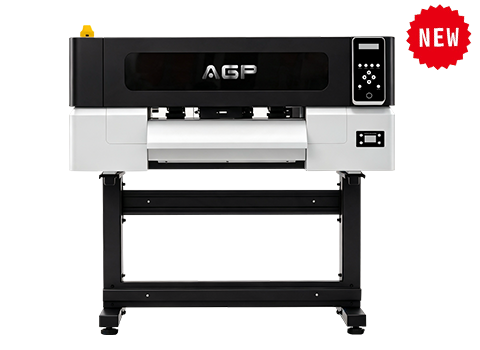
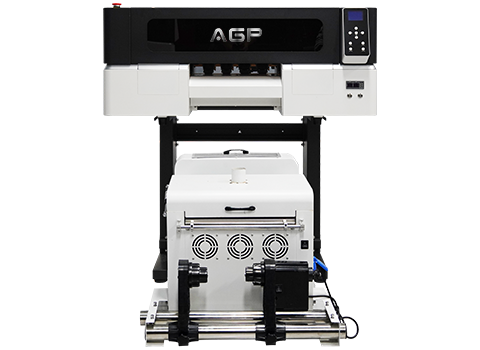
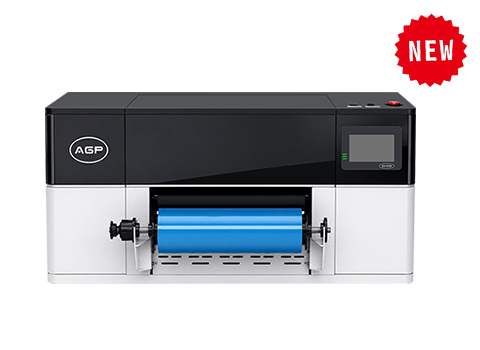
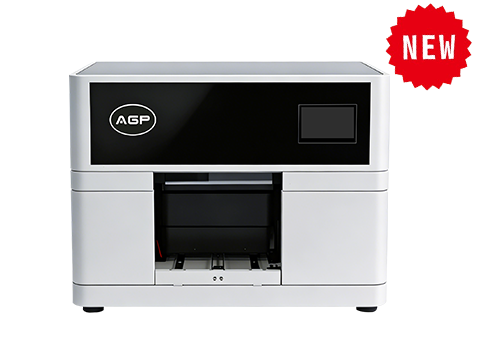
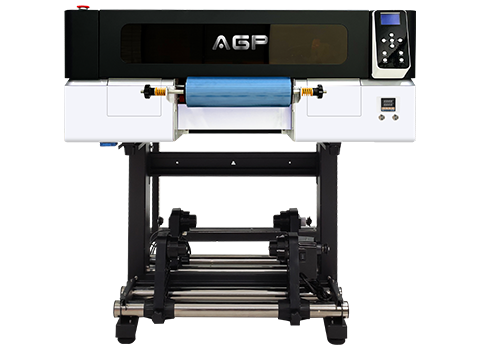
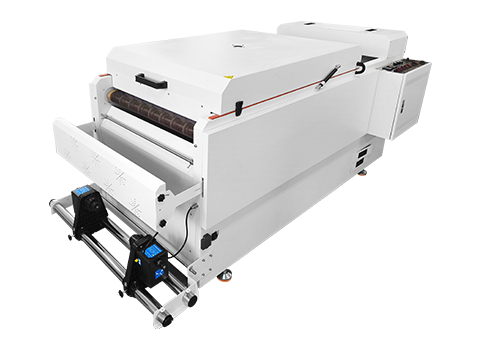
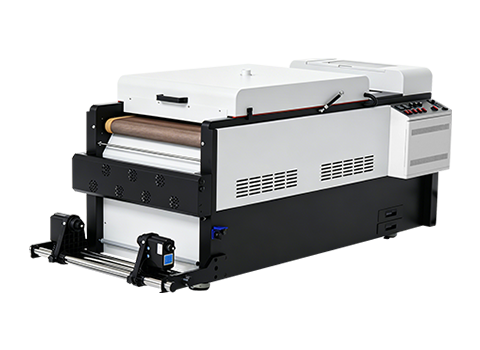
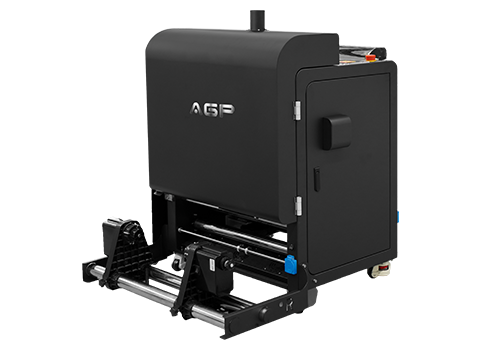
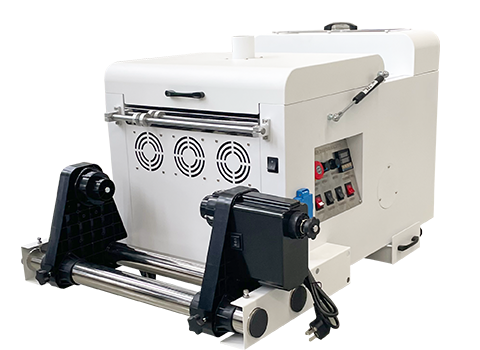
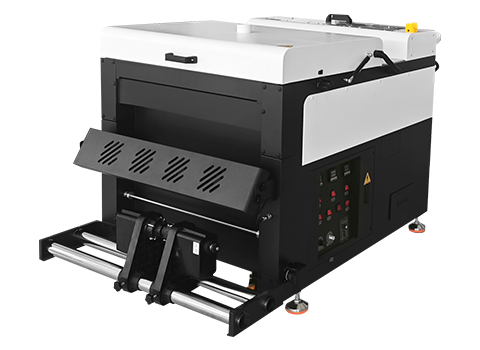
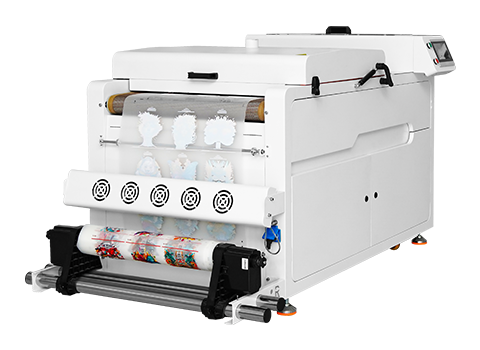
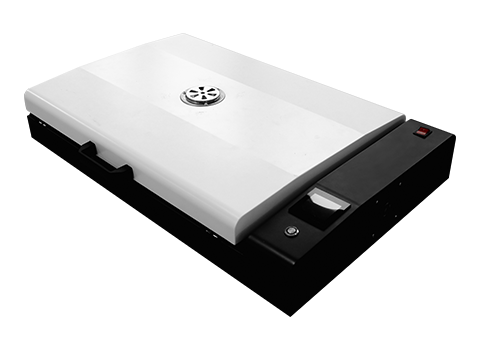
If DTF's equipment cost is what's holding you back, it's worth noting that the entry point has dropped considerably — a compact, single-head A3 machine like the DTF-E30 paired with a D300 compact powder shaker puts a full DTF workflow within reach of small studios that previously assumed DTF was out of budget.
FAQ: DTF vs HTV
Outgrowing HTV and ready to add full-color DTF to your shop? Talk to our team about the right entry-level setup for your volume.
Get a Quote Today