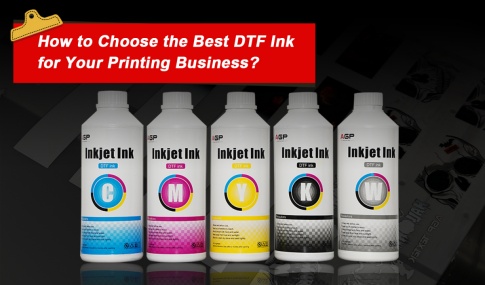


DTF Ink Explained: White, Fluorescent and Why It Settles
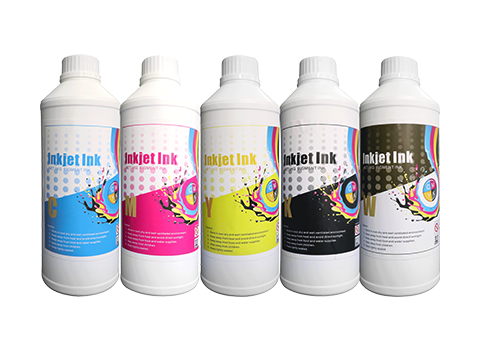
DTF ink is a pigment suspension, not a solution — and almost every ink problem in DTF follows from that one fact. Pigment particles sit in a carrier liquid, held in place after printing by a resin binder. They are heavier than water. They settle. They can dry into a plug that no cleaning cycle removes.
Understanding what is in the bottle explains why white fails first, why fluorescent colours behave oddly, and why storage rules that seem fussy are actually the cheapest maintenance you will ever do.
Quick Action Plan: Three Rules for Ink Health
- Circulate or agitate daily. White especially — a settled bottle is a future clogged damper.
- Never let a head sit dry. Ink drying in the nozzle is permanent; cleaning removes soft ink, not cured ink.
- Store sealed, cool and out of light. Oxidised and UV-exposed ink prints weak and fades early.
What Is Actually in DTF Ink
| Component | Job | Why it matters to you |
|---|---|---|
| Pigment | Colour and opacity | Particle size decides clog risk and grain in fine detail |
| Resin / binder | Locks pigment to the film and survives washing | Low-grade binder oxidises and yellows over time |
| Carrier (humectant + water) | Keeps pigment suspended and the head wet | Evaporates in an open system — the root of most clogs |
| Surfactants and dispersants | Stop particles clumping | Degrade if ink is stored hot or for too long |
| Biocide | Prevents growth in the tank | Depleted over time, especially in warm climates |
Colour ink and white ink are not the same formulation. White uses titanium dioxide — a dense, highly opaque particle — at a much higher solids loading, because opacity is the whole point. That is the difference that makes white your maintenance problem.
Why White Is the Problem Child
Three properties, all consequences of titanium dioxide:
It is heavy. White settles out of suspension faster than any colour pigment. A bottle left still for a week will show a clear layer at the top and a dense layer at the bottom. Printed without agitation, that gives thin, watery white with poor opacity — the classic "grey shirt shows through" complaint.
It is loaded heavily. To achieve opacity in one pass, white ink carries far more solids than colour ink. More solids means a thicker film in the lines and nozzles, which means dried ink forms a more obstructive plug.
It is unforgiving of air. White is sensitive to air ingress in the damper; a small bubble causes banding and missing sections that look like a head failure but are not.
The practical rules:
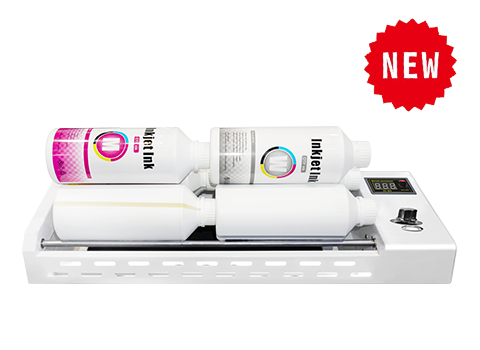
- Circulate white continuously if your machine has a circulation system; agitate bottles daily if it does not.
- Never let a white-filled machine sit unused for more than a few days without a purge cycle.
- Shake white more than you think necessary. A minute of agitation is cheaper than a damper.
- Keep white and colour maintenance separate — white needs more of everything.
Fluorescent and Specialty Inks
Fluorescent (neon) inks are pigment inks using fluorescent dyestuff, and they behave differently in three ways that catch people out:
They are not lightfast. Fluorescent pigments fade faster than conventional ones under UV, and outdoor exposure degrades them quickly. Sell them for indoor and event work, and say so.
They cannot be colour-managed the same way. Fluorescent colours sit outside the conventional CMYK gamut, so a standard ICC profile will convert them into something dull. They need their own profile or a manual workflow.
They need a white base to show. On dark fabric, a fluorescent colour printed without an adequate white underlayer will read as muddy. The white does the work; the fluorescent only supplies the hue.
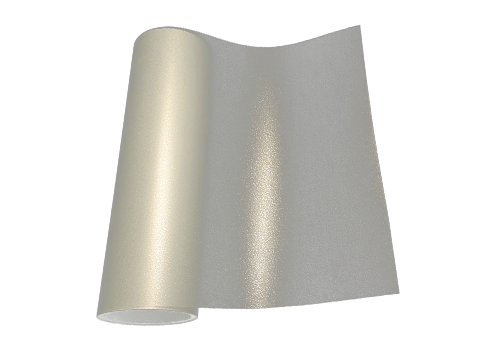
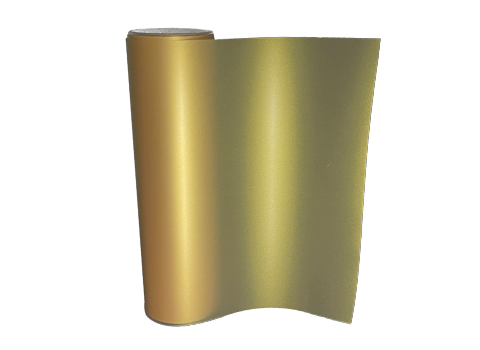
Other specialty inks follow the same logic — metallic, gold and silver formulations carry larger particles, which means higher clog risk and a stronger case for daily circulation. If you run specialty ink, run it regularly rather than saving it for occasional jobs.
Ink Volume: The Setting Nobody Calibrates
Most operators run more ink than necessary, because heavier ink looks better immediately — richer colour, more opaque white. The cost is invisible until you total it: a heavier film means more ink per square metre, a stiffer print, a slower cure, and more solvent to evaporate.
Two calibration habits that pay for themselves:
- Find the lightest ink limit that still meets your durability requirement. Print a test strip at several ink limits, wash it, and inspect. The lightest passing setting is your production setting.
- Separate white from colour in your limits. White needs enough to be opaque; colour rarely needs maximum. Treating them as one setting guarantees you over-ink one of them.
Storage and Shelf Life
| Factor | What to do | What happens if you ignore it |
|---|---|---|
| Light | Store in original opaque packaging, closed | UV degrades pigment; colours print weak and fade early |
| Temperature | Cool, stable; avoid freezing and hot storage rooms | Heat accelerates settling and depletes dispersants |
| Air | Seal immediately after use | Oxidation yellows white and degrades binder |
| Time | Rotate stock; use oldest first | Expired ink prints inconsistently and clogs more |
| Contamination | Never pour used ink back into a clean bottle | Cured particles and dust become a permanent grit source |
On "expired" ink: the honest answer is that ink does not fail on a date, it fails on storage. Ink kept sealed and cool for a long period is usually usable; ink kept open in a hot room for a few weeks may not be. Judge by behaviour — settling speed, colour strength, clog frequency — and label bottles with the date you opened them.
DTF Ink vs UV Ink: Not Interchangeable
Both are pigment-based, which leads people to assume they are close relatives. They are not:
| Comparison | DTF (textile) ink | UV-curable ink |
|---|---|---|
| Curing mechanism | Heat + hot-melt powder adhesive | Ultraviolet light, photo-initiator cross-links |
| Substrate | Fabric, via transfer | Rigid or film, direct or via UV DTF film |
| Flexibility | Must stay flexible through washing | Hard film; cracks if flexed |
| Failure if mixed up | Prints will not bond; head damage | Ink will not cure; head damage |
Putting one in the other's machine destroys the printhead and voids the warranty. It is the single most expensive mistake in this category, and it is made most often by shops running both technologies.
Frequently Asked Questions (FAQ)
What is DTF ink made of?
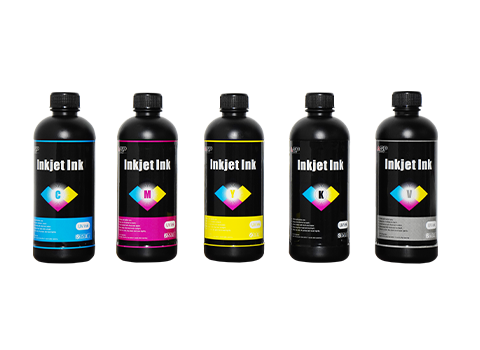
Textile pigment dispersed in a water-based carrier with a resin binder, surfactants to keep the pigment suspended, humectants to stop it drying in the head, and a biocide. White ink uses titanium dioxide at high solids loading to achieve opacity.
Why does white ink settle and clog more than colour?
Titanium dioxide is dense and white ink carries far more of it than colour ink carries pigment. Denser particles settle faster, and the thicker ink film dries into a more obstructive plug. That is why white needs continuous circulation and more frequent agitation.
Do I need to shake DTF ink bottles?
Yes, and white most of all. Daily agitation keeps pigment suspended. A bottle that has stood still shows separation within days, and printing from it without mixing gives weak, thin white with poor opacity.
How long does DTF ink last?
It depends on storage far more than on a printed date. Sealed, cool and dark, ink remains usable for a long time. Open, warm and exposed to light, it degrades within weeks. Label bottles with the opening date and judge by settling behaviour and colour strength.
Can I use UV ink in a DTF printer?
No. Different curing mechanism, different viscosity, different carrier. UV ink will not bond via hot-melt powder, and it can damage the printhead. The two chemistries are not interchangeable in either direction.
Why do my fluorescent colours look dull?
Two likely reasons: they were printed without an adequate white underlayer, so the garment colour shows through; or they went through a standard CMYK ICC profile that pulled them into gamut. Fluorescent colours need their own profile and a solid white base.
Get Ink and Profile Recommendations for Your Machine
Tell us your machine model, your fabric mix and whether you run specialty colours, and we will recommend the ink set, the white circulation routine and the profile workflow that suit it.
Ask for an Ink Recommendation