
UV Flatbed Printer for Print Shops: The Complete Buyer's Guide for Distributors
The custom printing market has changed a lot in recent years. Clients want more variety, faster turnaround, and better quality — all at once. Screen printing and traditional inkjet just can't keep up with those demands anymore, especially when your clients are handling orders across dozens of different materials.
That's where UV flatbed printers come in. If you're a distributor looking to help your clients upgrade their operations, understanding what UV flatbed printing can do — and which machines are worth recommending — is one of the most valuable things you can offer. This guide breaks it all down.
What Is a UV Flatbed Printer — and How Is It Different from Other Print Technologies?
A UV flatbed printer is a direct-to-substrate printing machine that applies UV-curable ink directly onto the surface of a material. Unlike DTF or sublimation printing, there's no transfer film or heat press involved. The machine prints directly, and the ink is cured instantly by an onboard LED UV lamp.
The "flatbed" part refers to the printing bed — a flat surface where rigid or semi-rigid materials are placed for printing. Because the printhead moves across a stationary substrate rather than feeding material through rollers, UV flatbed printers can handle items that would be impossible to print on with conventional machines: thick boards, glass panels, irregularly shaped objects, and more.
What makes this technology stand out is its combination of speed, material versatility, and output quality. For a print shop that wants to offer a broader product range without buying a separate machine for every substrate, a commercial UV printer is often the smartest single investment they can make.
Why UV Printing Makes Strong Business Sense for Print Shops
When your clients are evaluating new equipment, they're not just thinking about print quality. They're thinking about revenue, capacity, and competitive positioning. UV flatbed printing checks all three boxes.
No Plates, No Screens, No Minimum Orders: Traditional print methods often require setup costs that only make sense at scale. UV printing eliminates all of that. A shop can run a single piece just as efficiently as a batch of 500 — making it ideal for on-demand and small-run orders that are increasingly common in today's market.
Faster Turnaround: Because LED UV curing happens instantly as the ink is applied, there's no drying time between printing and handling. Jobs that used to sit for hours before finishing can now go straight from the printer to packaging. That kind of speed adds real capacity to a production floor.
Higher Margins on Premium Products: UV printing unlocks product categories that command strong margins — custom signage, branded merchandise, personalized drinkware, decorative panels, promotional gifts. These aren't commodity items. Clients who offer them can charge accordingly.
UV Printing Business ROI: For well-positioned print shops, equipment payback within months is realistic. When you're running high-margin products at consistent daily volume, the math works out quickly. As a distributor, being able to walk a prospect through that ROI calculation is a powerful sales tool.
What Materials Can a UV Flatbed Printer Handle?
This is usually the question that gets people's attention the fastest. The honest answer is: a lot.
UV printing on acrylic is one of the most popular applications — think custom signage, retail displays, and awards. The results are sharp, vibrant, and highly professional.
UV printing on glass opens up decorative applications for interior design, hospitality, and retail environments. Frosted glass panels, custom mirrors, and branded storefronts are all possible.
UV printing on metal is widely used for industrial signage, nameplates, branded merchandise, and architectural elements. The ink bonds tightly to the surface and holds up under tough conditions.
UV printing on wood is popular for personalized gifts, home décor, and artisanal products. Combined with the wood's natural grain texture, UV prints produce results that are genuinely premium-looking.
Beyond these, UV flatbed printers also handle leather, plastics, ceramics, PVC, paper, and more. And for cylindrical objects like tumblers and bottles, a 360-degree rotary UV printing attachment lets the printhead wrap the design seamlessly around the item — unlocking drinkware and packaging customization as additional product lines.
This material versatility is one of the biggest selling points when you're talking to a print shop owner who wants to expand without buying multiple machines.
Key Features to Look for in a Commercial UV Flatbed Printer
Not all UV printers are built the same. When you're recommending equipment to a client, here are the specs and features that actually matter in a production environment:
Print Resolution: For commercial work, you want at minimum 720 DPI, with higher-end models reaching 1440 DPI or beyond. Resolution affects edge sharpness, fine detail, and overall perceived quality — especially for branded merchandise and signage.
White Ink Capability: If your clients are printing on dark or transparent substrates, white ink underlay is essential. It provides the opaque base layer that makes colors pop, particularly on glass, metal, and dark acrylic. Look for machines that handle white ink as a standard channel, not an add-on.
Varnish and Special Effects: The ability to print gloss varnish, raised textures, and 3D effects transforms a UV printer from a basic production tool into a premium product platform. These effects directly support higher pricing and product differentiation.
Vacuum Table System: A strong vacuum hold-down keeps substrate flat and secure during printing, which is critical for registration accuracy on rigid materials. Without it, you get misalignment and wasted media.
Automatic Media Height Detection: This safety feature prevents printhead strikes when materials of varying thickness are loaded. It's not glamorous, but a single head strike on a production machine can be very costly — so this matters.
Rotary Attachment: For any client targeting the drinkware, bottle, or cylindrical product market, a rotary system is a must-have. Confirm it's available for the models you're recommending.
UV Ink Performance: What Makes LED UV Curing So Effective?
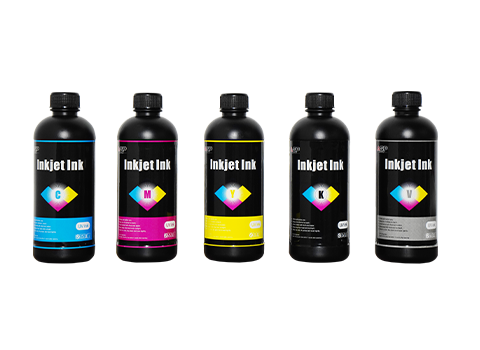
The ink system is really the heart of what makes UV flatbed printing solutions so dependable in commercial environments. Here's why UV curable ink with LED curing outperforms older technologies:
Instant Curing: LED UV lamps cure the ink as it lands on the substrate, with no waiting period. The printed item is dry, hard, and ready to handle the moment it exits the print zone. That's a fundamental advantage over solvent or water-based inks that require drying time.
Adhesion Across Substrates: UV inks are formulated to bond to a wide range of surfaces, including non-porous materials like glass and metal where other inks simply can't hold. The right ink formulation makes UV ink adhesion a strength rather than a concern.
Durability: UV-cured ink is resistant to abrasion, water, and UV light exposure. For outdoor signage, industrial applications, and high-contact promotional items, that durability translates directly to customer satisfaction and repeat business.
Low Odor, Low VOCs: Compared to solvent-based inks, UV systems are far friendlier in enclosed production environments. That's increasingly important as shops operate in commercial spaces with ventilation constraints.
Color Vibrancy: High-quality UV inks deliver vivid, consistent color across runs — critical for branded work where color accuracy matters.
AGP UV Flatbed Printer Lineup: Which Model Is Right for Your Clients?
AGP offers a strong range of UV printers covering everything from compact entry-level machines to high-speed wide-format production units. Here's how to match the right model to the right client:
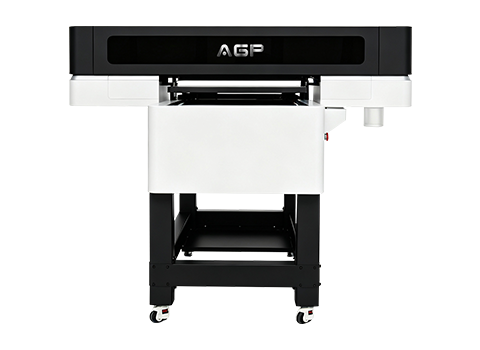
AGP UV6090 — Powered by 3× Epson I3200-U1 printheads, this flatbed model handles both regular and irregular surfaces across a 60×90cm print area. Standard color configuration is CMYK+W+V (varnish). It's compatible with metal, leather, wood, paper, plastic, ceramic, and glass — making it one of the most versatile options in the lineup. Great for print shops that want a reliable all-rounder.
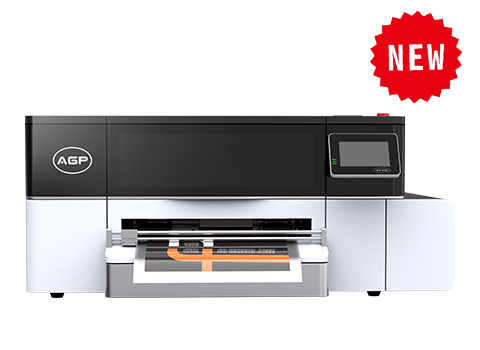
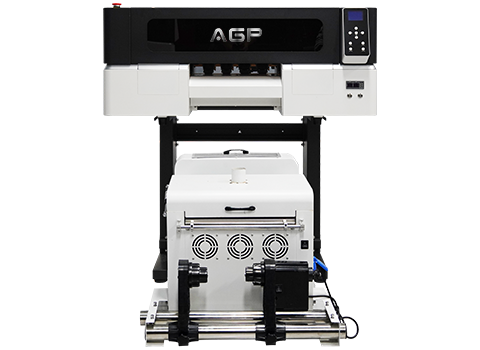
AGP UV3040 — Built around the Epson I3200-U1 HD printhead, the UV3040 supports standard CMYK+W+V with an optional extended color configuration. Suitable for glass, acrylic, PVC, crystal, leather, and signage materials. Software compatibility includes Maintop, FlexiPRINT, RIIN, and Neostampa. A strong mid-range option for shops that need consistent quality across a variety of substrates.
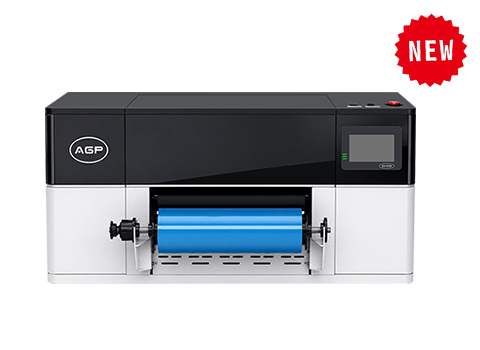
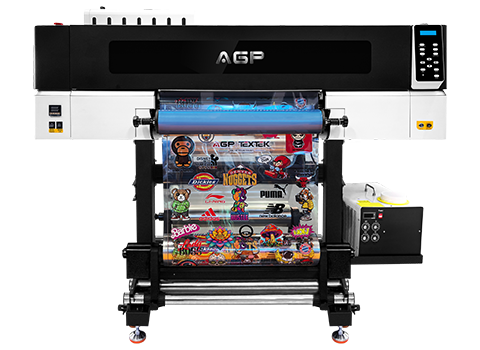
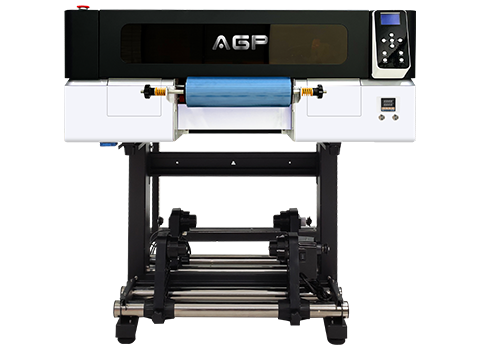
AGP UV-S604 — A 600mm roll-to-roll UV printer featuring Epson I3200-U1 heads (3 or 4), with color options including W+CMYK+V and G+W+CMYK+V. This model is particularly well-suited for clients producing UV DTF crystal labels, stickers, and flexible substrate applications alongside hard material printing.
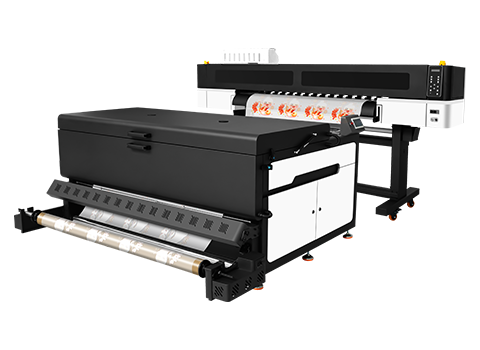
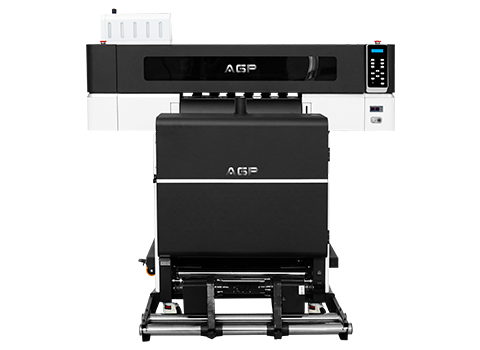
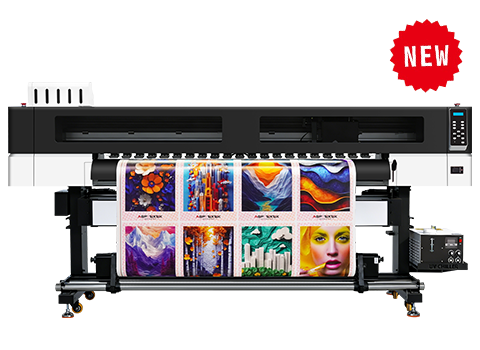
AGP UV-S1600 — Wide-format at 1600mm print width, powered by Epson I3200-U1 heads. Built for shops that need to handle large-format signage, banners, and wide rigid substrates. If a client is running a sign-making or display graphics business, this is a serious production tool.
AGP UV-S1900 — AGP's flagship wide-format UV printer at 1850mm print width, reaching up to 69.5 m²/h output speed with 3× Epson I3200-U1 heads and a max resolution of 720×2400 DPI. For high-volume production environments — large-format print shops, signage companies, display manufacturers — this is the machine to recommend.
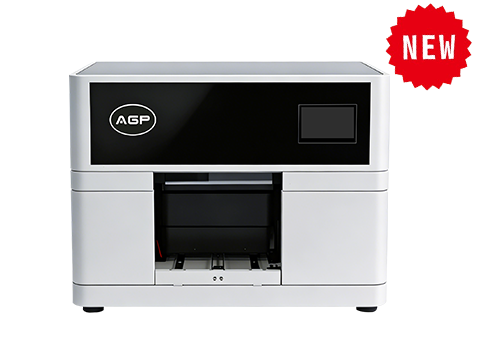
AGP UV A5 — A compact desktop option for clients just entering the UV printing space. A5 print area, single DX7 or F1080 printhead (optional), CMYK+W output. Ideal as an entry point for small shops or studios testing the UV product category before committing to a larger machine.
AGP UV-S30 — A 300mm compact UV printer running 3× Epson F1080/I1600-U1 heads. Supports CMYK+W+V and integrates smoothly with popular RIP software. A solid step-up from desktop entry-level for shops that need slightly more output capacity without going full industrial.
How to Help Your Clients Justify the Investment in a UV Flatbed Printer
Even when a client is excited about UV printing, they still need to justify the purchase internally. Here are a few practical ways to help them build that case:
Map it to product lines they can't currently serve: Ask what jobs they're turning away right now. Rigid substrates, drinkware, promotional items? A UV flatbed printer lets them say yes to those orders instead of referring them out.
Walk through the per-piece margin: UV printing on premium products — custom signage, branded gifts, personalized drinkware — typically generates margins well above standard garment printing. Help your client calculate what a realistic daily run looks like and what the revenue adds up to over a month.
Show the versatility advantage: One machine that handles glass, metal, acrylic, wood, leather, and plastics means one capital purchase replaces what would otherwise require multiple specialized systems or outsourcing relationships.
Highlight AGP's support structure: Especially for clients newer to UV technology, knowing that installation support, training, and after-sales service are included reduces perceived risk. AGP backs every machine with technical support and a 1-year warranty — that's a real differentiator compared to cheaper alternatives with no service infrastructure.
Think about scalability: Starting with a UV A5 or UV3040 doesn't lock a client into that level forever. As their UV revenue grows, upgrading to a larger model is a natural next step. Positioning your relationship as a long-term growth partnership, rather
than a one-time transaction, builds loyalty and future business.
Final Thoughts
UV flatbed printing isn't a niche technology anymore — it's a mainstream commercial production tool, and the shops that adopt it are positioning themselves ahead of competitors still relying on older methods. For distributors, this represents a genuine opportunity: the clients who invest in a high-resolution UV printer today are the ones who will be growing their businesses and coming back for consumables, accessories, and upgrades tomorrow.
AGP's UV printer lineup gives you a full range of options to match any client profile, from entry-level studios to high-volume industrial operations — all backed by a manufacturer with 20+ years of experience and a global distributor network.
Ready to explore the right UV printing solution for your clients? Visit www.agoodprinter.com or contact the AGP team directly via WhatsApp at +86 177 4040 5829.