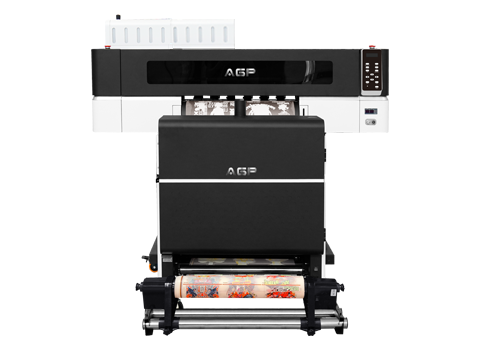
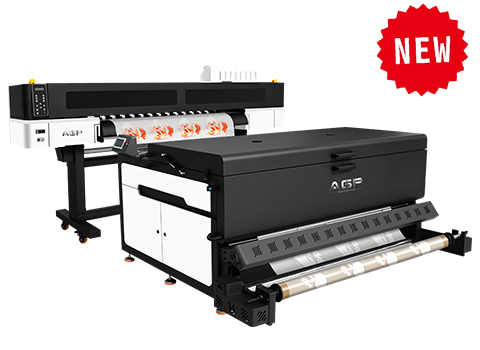
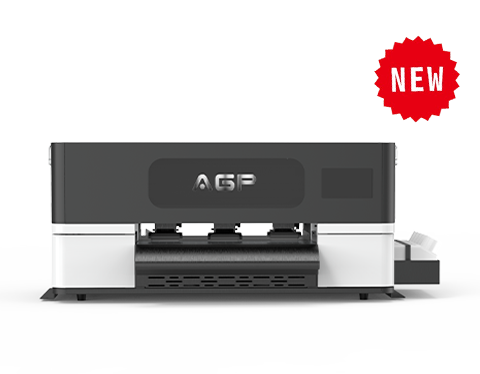
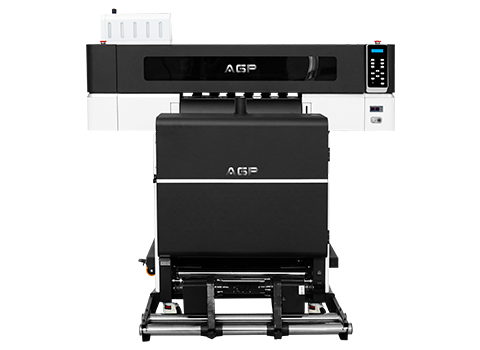

DTF vs UV DTF vs UV Printing: What's the Real Difference (and Which One Do You Need)?
Quick Answer: DTF printing transfers a design onto fabric using a heat press and adhesive powder — best for apparel and soft goods. UV DTF printing prints onto a special film that's UV-cured instantly, then peeled and stuck onto hard surfaces like glass, metal, or tumblers — no heat press needed. UV printing (direct flatbed) skips the film entirely and cures ink straight onto the rigid object itself. If your business is apparel, choose DTF. If you need stickers for hard, curved, or irregular items, choose UV DTF. If you're printing directly on flat rigid panels at scale, choose UV printing.
Few terms in the customization industry cause more confusion than "DTF" and "UV DTF." They share a name, but they're built on completely different technology, work on different materials, and serve different business models. Add a third option — direct UV flatbed printing — and it's easy to see why so many buyers aren't sure which machine they actually need. This guide breaks down exactly how each method works, what it can and can't do, and which one fits your production goals.
What Is DTF Printing?
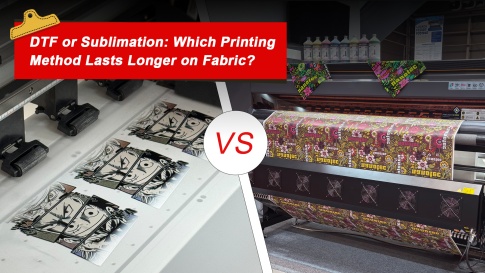
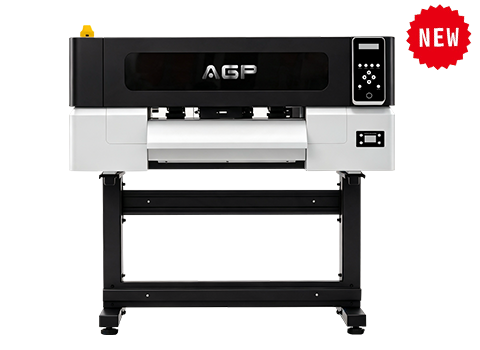
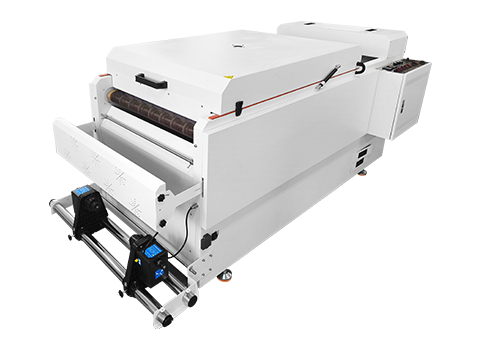
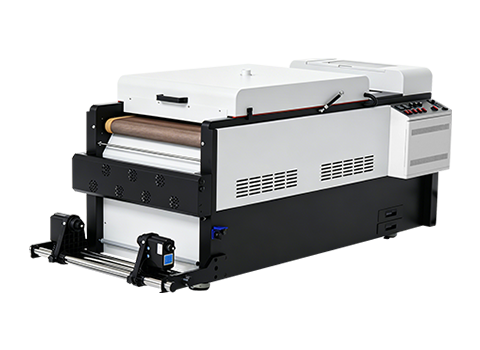
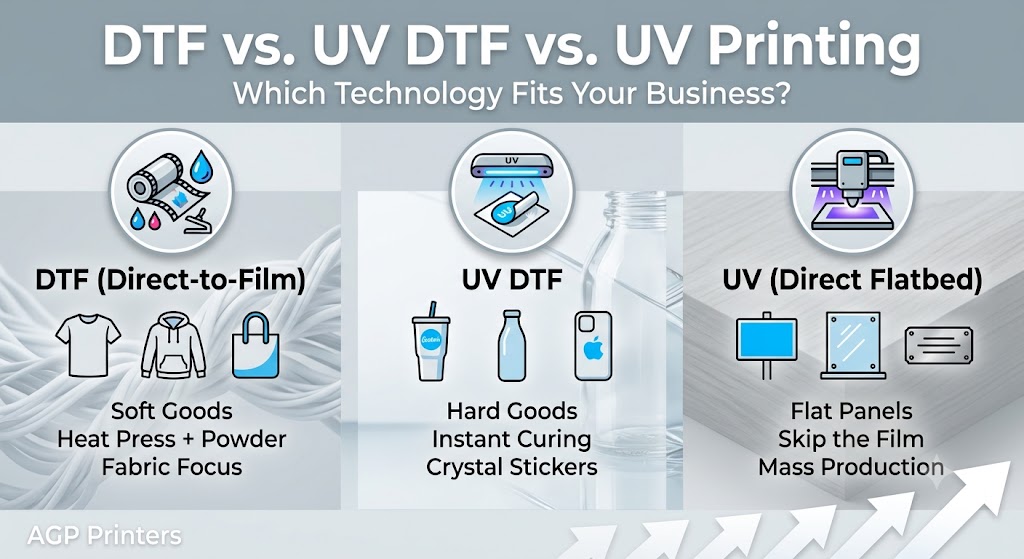
DTF (Direct-to-Film) printing prints a design using water-based pigment ink onto a PET film, then applies hot-melt adhesive powder over the wet ink. Once cured, the film is pressed onto fabric with a heat press, bonding the design permanently to the textile. The film is peeled away, leaving a vibrant, flexible print behind.
Best for: T-shirts, hoodies, tote bags, and any soft, flexible fabric — cotton, polyester, blends, and dark-colored garments included, thanks to a white ink underbase.
What Is UV DTF Printing?
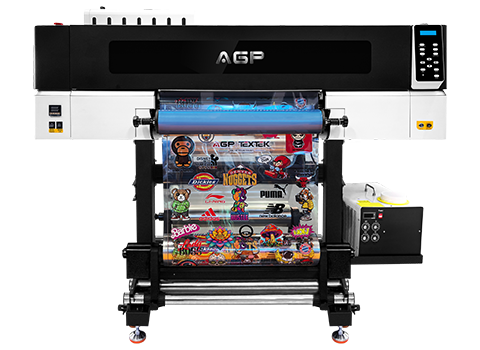
UV DTF printing prints a design onto a special film using UV-curable ink, which hardens instantly under UV light as it's printed — no oven, no powder, no heat press. A second transfer film is laminated on top, and the finished "crystal sticker" is then peeled and pressed directly onto a hard surface, bonding on contact.
Best for: tumblers, bottles, phone cases, packaging, and any hard, smooth, curved, or irregularly shaped object where a heat press isn't practical.
What Is UV Printing (Direct Flatbed)?
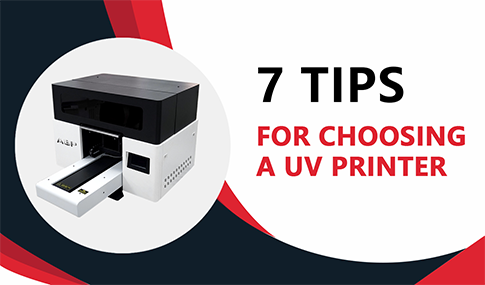
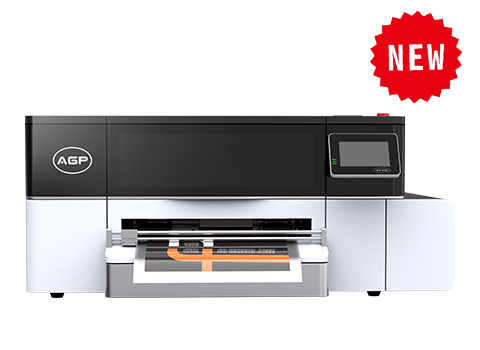
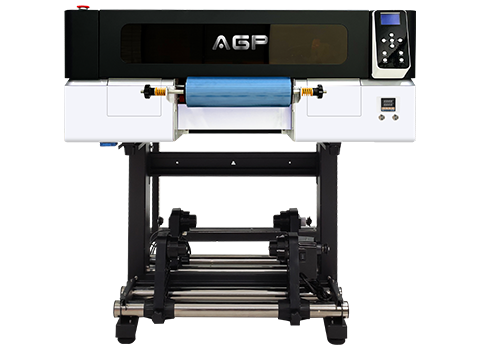
UV printing skips the transfer film step entirely. A UV flatbed printer applies ink directly onto the surface of a rigid object — acrylic, wood, metal, glass — and cures it instantly with UV light as it prints. There's no peeling, no sticker, and no separate application step; the object comes off the printer finished.
Best for: flat rigid panels and signage produced at scale — acrylic signs, wood plaques, metal nameplates, and glass panels — where direct, permanent surface printing is more efficient than making individual stickers.
What's the Core Difference Between the Three?
The real distinction comes down to two questions: does the ink need heat to bond, and does the design travel through a film before landing on the final surface?
- DTF needs heat (a press) and a powder adhesive — film is just a temporary carrier for fabric.
- UV DTF needs no heat — the film becomes a peel-and-stick sticker that bonds on contact, ideal for hard, curved, or hard-to-fixture items.
- UV Printing needs no heat and no film — ink is cured directly onto the final object as it prints, ideal for flat, mass-produced rigid panels.
Which Materials Does Each Method Work On?
DTF is built exclusively for fabric — cotton, polyester, blends, nylon. UV DTF and UV printing both work on hard, non-porous materials like glass, metal, acrylic, wood, and plastic, but neither is suitable for stretchy or flexible fabric, since a rigid, cured ink layer will crack under repeated fabric movement.
Which Method Is Most Durable?
All three can produce long-lasting results when applied correctly, but they fail differently under stress. DTF prints remain flexible and resist cracking through repeated fabric stretching and washing. UV DTF and UV-printed surfaces form a hard, scratch-resistant, waterproof layer that holds up extremely well on rigid objects — but that same rigidity means UV DTF should never be applied to anything that needs to flex or stretch.
Which Method Costs Less to Start?
DTF generally has the lowest barrier to entry — printers, PET film, and hot-melt powder are widely available at accessible price points, making it the common starting point for apparel-focused entrepreneurs. UV DTF and UV printing typically require a higher upfront investment in equipment and UV-curable ink, though pricing has become significantly more accessible as the technology has matured.
Can You Combine DTF and UV DTF in One Business?
Yes — and many growing print shops do exactly this. Running DTF for apparel and UV DTF (or UV printing) for hard goods lets a single business serve both markets: custom shirts and hoodies alongside tumblers, signage, and personalized gifts — without needing two completely separate production teams.
DTF vs. UV DTF vs. UV Printing at a Glance
| Factor | DTF | UV DTF | UV Printing |
|---|---|---|---|
| Curing method | Heat press + adhesive powder | Instant UV light, no heat | Instant UV light, no heat |
| Uses a transfer film | Yes (temporary carrier) | Yes (becomes the sticker) | No — prints directly on object |
| Best surface type | Soft, flexible fabric | Hard, curved, or irregular objects | Flat, rigid panels |
| Typical products | T-shirts, hoodies, tote bags | Tumblers, bottles, phone cases | Signage, acrylic panels, nameplates |
| Startup cost | Lower | Moderate to higher | Moderate to higher |
| Flexibility of final print | High — moves with fabric | Low — rigid, not for stretch fabric | Rigid — for hard surfaces only |
Material Compatibility Reference
| Material | DTF | UV DTF | UV Printing |
|---|---|---|---|
| Cotton / Polyester Fabric | ✔ Excellent | ✘ Not suitable | ✘ Not suitable |
| Glass / Metal / Acrylic | ✘ Not suitable | ✔ Excellent | ✔ Excellent |
| Curved / Cylindrical Items | ✘ Not suitable | ✔ Excellent | Limited (needs jig/rotary) |
| Wood | ✘ Not suitable | ✔ Good | ✔ Excellent |
| Leather | ✘ Not suitable | ✔ Good | Limited |
Which Should You Choose for Your Business?
Choose DTF if apparel and soft goods are your core business — it remains the most cost-effective entry point for custom clothing.
Choose UV DTF if you want to sell personalized hard goods — tumblers, bottles, phone cases — without investing in a full flatbed printer, or if your products are curved, small, or oddly shaped.
Choose UV Printing if you're producing flat rigid panels at volume — signage, nameplates, wood or acrylic decor — where printing directly onto the final object is faster than making individual transfers.
Many successful print shops eventually run more than one of these methods side by side to serve both the apparel and hard-goods markets from a single production floor.
Conclusion: Matching the Right Technology to Your Products
DTF, UV DTF, and UV printing may share overlapping names and some underlying UV-curing technology, but each is engineered for a distinct category of products. Understanding what each method can — and can't — do prevents costly equipment mismatches and helps you build a production line that actually fits your product mix.
AGP manufactures DTF printers for textile production, UV flatbed printers for rigid substrates, and UV DTF film and consumables for hard-good customization — so whichever direction your business grows, our team can help you configure the right equipment. Contact us to discuss your product line.
FAQ: DTF vs UV DTF vs UV Printing
Is UV DTF the same as DTF?
No. They share the "DTF" name, but DTF uses heat and adhesive powder to bond ink onto fabric, while UV DTF uses UV-cured ink on a peel-and-stick film for hard surfaces — the chemistry, equipment, and target materials are completely different.
Can I use UV DTF transfers on a T-shirt?
No. UV DTF prints are rigid once cured and will crack or peel when the fabric stretches or is repeatedly washed — regular DTF is the correct method for garments.
Can I use a regular DTF printer to make UV DTF stickers?
No. UV DTF requires a UV printer with UV-curable ink and a laminating step; a standard DTF printer uses different ink and film and cannot produce the cured, sticker-style output UV DTF is known for.
Do I need a heat press for UV DTF or UV printing?
No. Both methods cure the ink instantly under UV light. UV DTF transfers are applied with firm hand pressure, and UV printing applies ink directly to the object with no separate pressing step at all.
Which method is best for a small business just starting out?
If your product focus is apparel, DTF has the lowest startup cost. If you want to sell personalized hard goods like tumblers or phone cases, UV DTF offers strong versatility without requiring a full flatbed UV printer.
Can one business run both DTF and UV DTF?
Yes. Many print shops run DTF for apparel orders and UV DTF (or UV printing) for hard-good orders side by side, expanding their product range without duplicating their entire production process.
What's the main advantage of UV printing over UV DTF?
UV printing skips the film and sticker step entirely, printing directly onto the final object — which is generally faster and more cost-efficient for flat, high-volume items like signage and decorative panels.