
How to Choose DTF Consumables: The Complete Ink, Powder & Film Buying Guide (2026)
Your DTF printer is only as good as the consumables running through it.
You can invest in the best machine on the market — genuine Epson printheads, a precision powder shaker, professional RIP software — and still get poor results if your ink is the wrong formulation, your powder doesn't bond correctly, or your film has inconsistent coating. Worse, using incompatible consumables is one of the leading causes of printhead clogging, color inconsistency, and premature hardware failure.
This guide covers everything you need to know about choosing DTF consumables: what to look for, what to avoid, how to evaluate suppliers, and what AGP recommends for different production environments.
The Three Core DTF Consumables
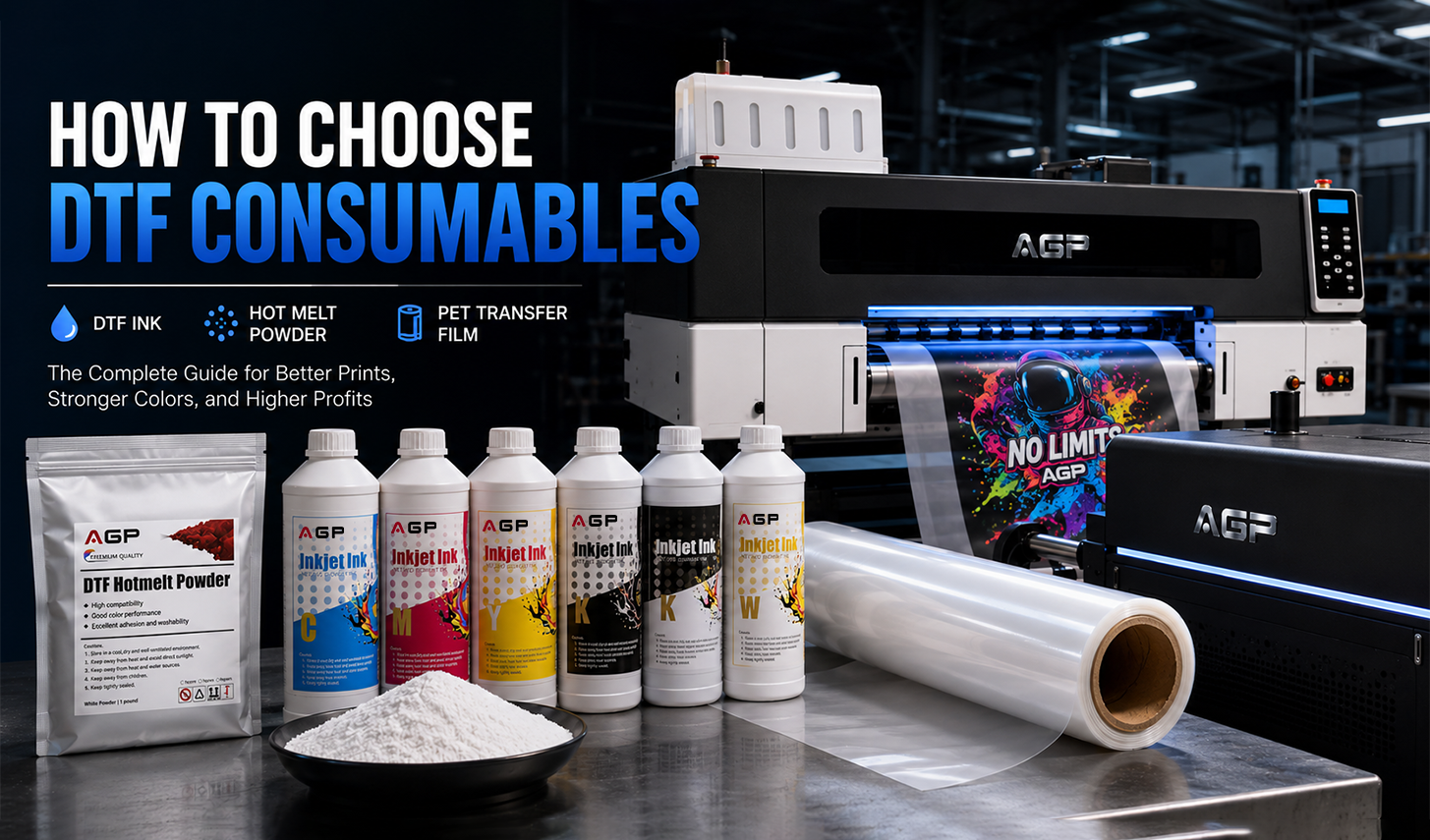
Every DTF print job requires exactly three consumables working in harmony:
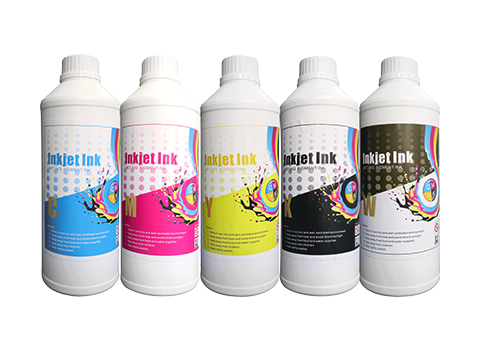
- DTF Ink — the pigment-based ink that creates your image
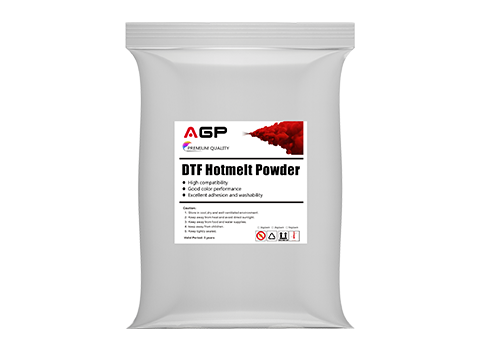
- Hot-Melt Adhesive Powder — the bonding agent that fuses the transfer to fabric
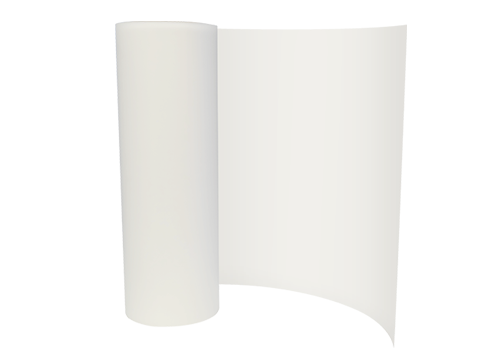
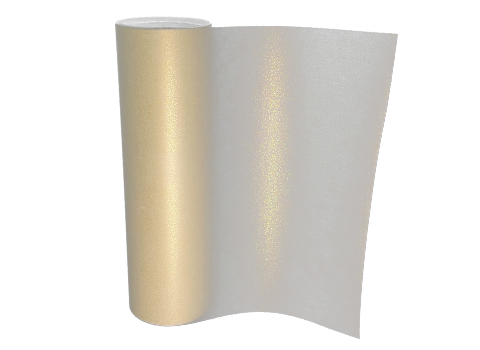
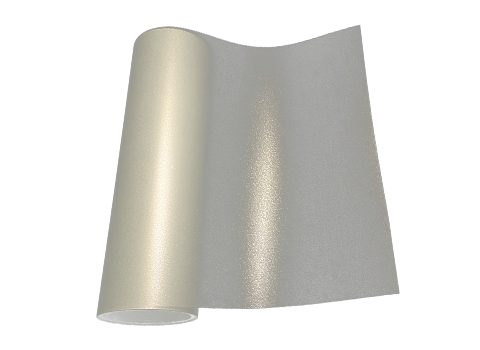
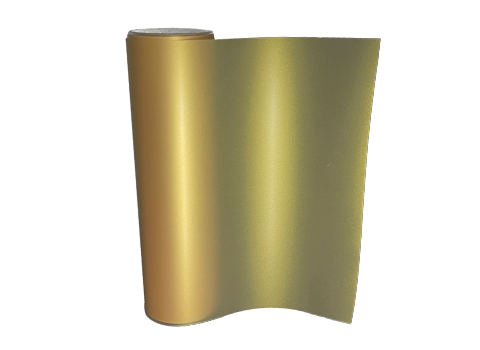
- PET Transfer Film — the substrate you print on
Each one affects the final output differently. A problem with any single consumable will compromise the entire transfer — even if the other two are perfect.
Part One: DTF Ink
What DTF Ink Is and How It Works
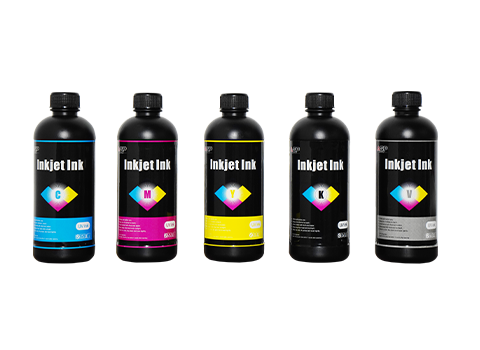
DTF ink is a water-based pigment ink formulated specifically for printing onto PET transfer film. Unlike standard inkjet inks, DTF ink must:
- Adhere to the smooth, non-absorbent surface of PET film
- Remain flexible after curing (so the transfer moves with fabric)
- Maintain color accuracy through the heat press process
- Be compatible with hot-melt powder adhesion
DTF ink sets always include at minimum five channels: Cyan, Magenta, Yellow, Black (CMYK), and White. White is the most critical and most technically demanding channel — it forms the opaque underbase that makes colors pop on dark fabrics.
Some advanced configurations add Fluorescent Red (FR) and Fluorescent Green (FG) channels for sportswear and high-visibility applications, or Light Cyan and Light Magenta for smoother gradients and skin tones.
What to Look For in DTF Ink
Printhead Compatibility This is non-negotiable. DTF ink must be formulated for your specific printhead model. AGP machines use Epson printheads (F1080, I1600, I3200 series) — each with different nozzle geometry, droplet size, and ink viscosity requirements. Using ink designed for a different printhead type is the fastest way to cause permanent nozzle damage.
Always confirm the ink is certified compatible with your exact printhead before purchasing.
White Ink Stability White DTF ink contains titanium dioxide pigment particles that are significantly heavier than color pigments. Without proper formulation and regular agitation, white ink settles rapidly — causing nozzle blockages, inconsistent opacity, and wasted ink. Quality white ink has:
- Fine, uniform particle size for stable suspension
- Anti-settling additives that slow sedimentation
- Good re-dispersibility (shakes back to homogeneous easily)
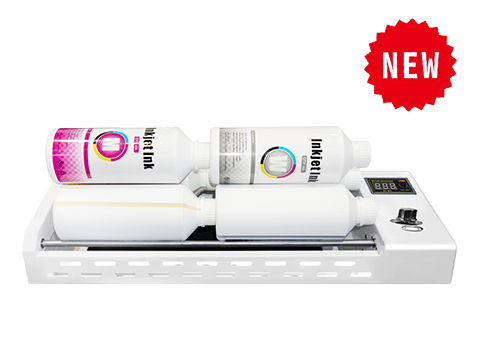
If your printer doesn't have a built-in white ink circulation system, a white ink rotator (AGP IM-4 / IM-6) is essential for keeping white ink usable between print runs.
Color Gamut and Accuracy DTF ink color output varies significantly between manufacturers. Key indicators of quality color ink:
- Wide color gamut — vibrant, saturated output across the full CMYK range
- Accurate color matching when using ICC profiles
- Consistent batch-to-batch color, so reprints match original orders
- Good light fastness — colors don't fade significantly after repeated washing
Wash Durability The ink layer must survive heat pressing, peeling, and repeated washing without cracking, fading, or peeling. Quality DTF ink maintains flexibility after curing because of plasticizer additives that prevent the ink film from becoming brittle.
Ask suppliers for wash durability test data — reputable manufacturers test to 50+ wash cycles at standard laundry conditions.
Ink Viscosity and Flow DTF ink must maintain consistent viscosity across a range of operating temperatures. Ink that's too thick clogs nozzles; ink that's too thin causes dot gain and bleeding on film. Quality ink is formulated to stay within the tight viscosity window your printhead requires, even as workshop temperature fluctuates.
Common DTF Ink Problems and Their Causes
| Problem | Likely Cause |
|---|---|
| Nozzle clogging | Incompatible formulation, oversized pigment particles, dried ink |
| Color banding | Inconsistent viscosity, partially blocked nozzles |
| White ink opacity issues | Pigment settling, under-density settings, poor formulation |
| Colors look dull after transfer | Wrong ICC profile, ink-film compatibility mismatch |
| Prints crack after washing | Insufficient plasticizer, over-curing during powder shaker process |
| Color shift between batches | Poor manufacturing consistency, no batch QC |
DTF Ink Storage and Handling
- Store at 15–25°C, away from direct sunlight
- Keep sealed until use — exposure to air accelerates drying and particle oxidation
- Shake or rotate white ink before every use
- Use within the manufacturer's shelf life (typically 12–18 months from production date)
- Never mix inks from different manufacturers or different batches without testing
Part Two: DTF Hot-Melt Adhesive Powder
What DTF Powder Is and How It Works
DTF hot-melt powder (also called DTF adhesive powder or DTF bonding powder) is a thermoplastic polyurethane (TPU) powder that serves as the adhesive layer between the printed ink film and the fabric. After printing, the powder is applied over the wet ink, melted in the powder shaker's curing zone, and forms a continuous adhesive coating on the back of the transfer.
When the transfer is heat pressed onto fabric, the adhesive melts again and permanently bonds the ink layer to the fibers. The result is a flexible, wash-durable bond that holds the transfer firmly without stiffening the fabric.
Powder Grades: Fine, Medium, and Coarse
DTF powder comes in different particle size grades, each suited to different applications:
Fine Powder (80–120 mesh)
- Produces the softest hand feel on finished transfers
- Best for detailed designs with fine lines and small text
- Slightly more difficult to remove from non-printed areas (requires well-calibrated shaker)
- Recommended for fashion apparel, retail garments, and designs where soft feel is a priority
Medium Powder (60–80 mesh)
- The most versatile grade — good balance of adhesion, hand feel, and ease of processing
- Works well across a wide range of fabric types
- Recommended as the default choice for most DTF production environments
- Good for sportswear, casualwear, and mixed-fabric applications
Coarse Powder (40–60 mesh)
- Strongest adhesion and most durable bond
- Slightly stiffer hand feel on finished transfers
- Easiest to apply and remove excess cleanly
- Best for workwear, canvas bags, denim, and applications where durability matters more than softness
Powder Color: White vs. Black vs. Transparent
White powder is the standard for most DTF applications — works on all fabric colors, gives a slightly opaque backing that's invisible on the front of the transfer.
Black powder is used for dark-fabric applications where the white backing might be visible at the transfer edges. Rare in most workflows but useful for edge-sensitive designs on black or very dark garments.
Transparent/clear powder is used in specialty applications where the backing layer must be invisible — typically for transfers on light-colored fabrics where edge definition is critical.
What to Look For in DTF Powder
Melt Point Consistency Quality DTF powder melts completely and evenly within a narrow temperature range (typically 110–130°C). Powder with inconsistent melt point behavior produces patchy adhesion and requires constant temperature adjustments in the powder shaker.
Flow and Distribution Powder should flow freely and distribute evenly across the film surface. Powder that clumps, cakes, or flows inconsistently — often a sign of moisture contamination or poor manufacturing — causes uneven powder coverage and adhesion failures.
Adhesion Strength After heat pressing, the bond between transfer and fabric should withstand stretching, washing, and abrasion. Test adhesion by performing a peel test after pressing and a wash test after 10+ laundry cycles. Quality powder maintains adhesion with no lifting or edge peeling.
Moisture Sensitivity TPU powder is hygroscopic — it absorbs moisture from the air, which causes clumping and reduces flow consistency. Quality powder includes moisture-resistant packaging and maintains stability in normal workshop humidity (40–60% RH). Store in sealed containers and avoid leaving powder exposed to air during production.
Powder Compatibility with Your Shaker
Different powder shaker models are designed for specific powder grades. A machine calibrated for medium powder may dispense fine powder unevenly, and vice versa. Always confirm the recommended powder grade for your specific shaker model before switching.
For AGP powder shakers:
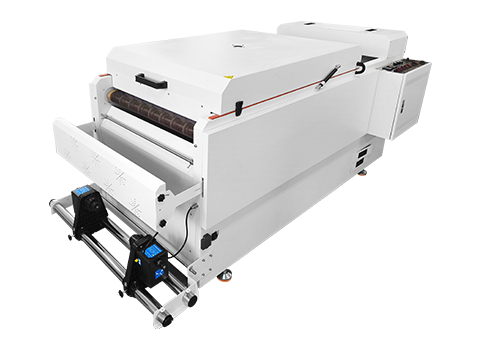
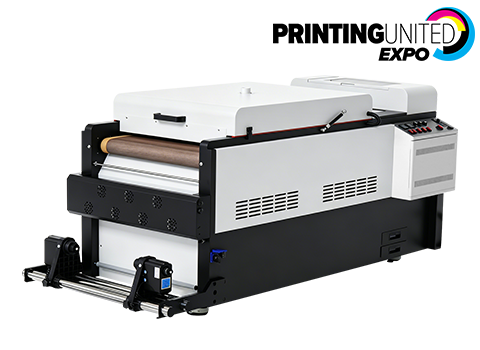
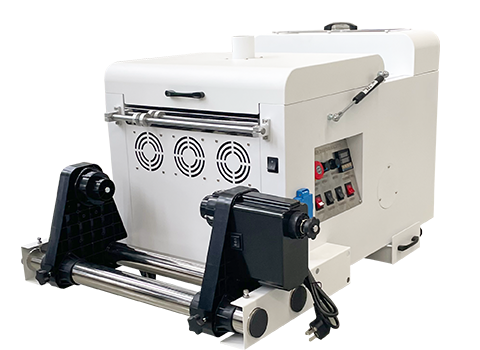
- D300 — best with fine or medium powder for A3 production
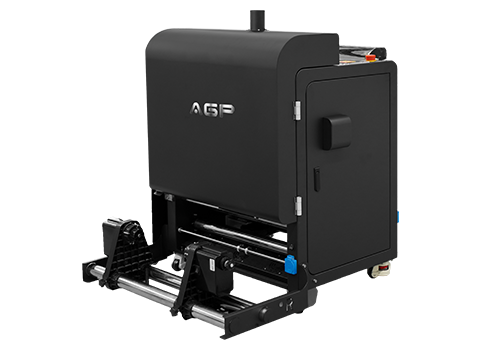
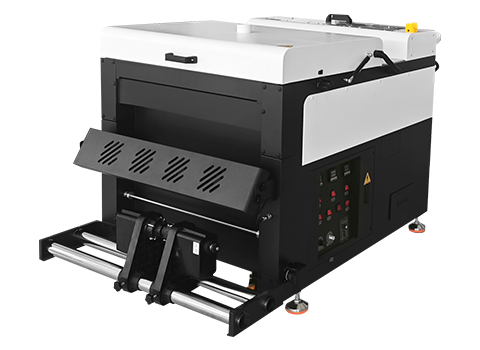
- H650 series — compatible with fine, medium, and coarse grades; adjustable vibration and feed rate
- H6505 / H650L — high-volume production; medium powder recommended for consistent throughput
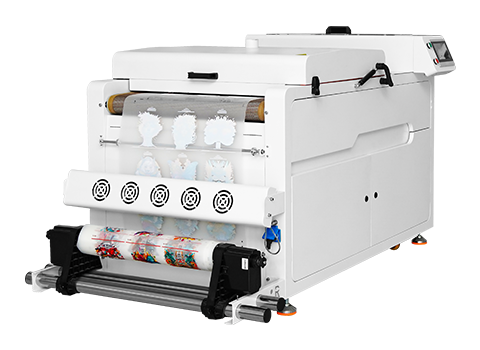
- H1600 — industrial scale; medium to coarse powder for maximum output stability
Part Three: DTF PET Transfer Film
What DTF Film Is and How It Works
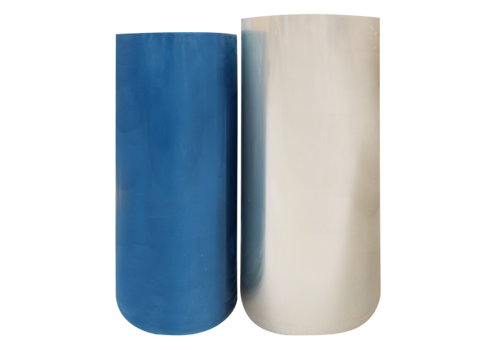
DTF transfer film is a polyethylene terephthalate (PET) film with a special release coating on one side. The release coating is what makes the film work — it holds the ink firmly during printing and powder application, then releases the cured transfer cleanly when peeled after heat pressing.
Film quality is often the most overlooked variable in DTF production, but it directly affects:
- Print sharpness and edge definition
- How evenly the ink sits on the film surface
- Whether the transfer releases cleanly or tears during peeling
- Dimensional stability during heat pressing
DTF Film Types
Hot Peel Film The transfer film is peeled immediately after heat pressing, while still warm. Hot peel film is faster for production (no waiting for the transfer to cool) and produces a slightly glossy finish on the final print.
Cold Peel Film The transfer is allowed to cool completely before peeling. Cold peel film typically produces a matte finish and is considered more forgiving for operators — the cooler transfer is more stable and less likely to stretch or distort during peeling.
Dual-Temp (Hot/Cold) Film Some premium films are formulated to work with both hot and cold peel. These offer flexibility for different press configurations and operator preferences.
Most AGP customers use cold peel film as standard — it's more consistent for production environments with variable press temperatures or less experienced operators.
Film Width and Format
DTF film comes in rolls of different widths to match different printer configurations:
| Printer Series | Recommended Film Width |
|---|---|
| DTF-E30 / DTF-T30 | 300mm (A3) |
| DTF-T652 / T653 / T654 | 600mm |
| DTF-TK1600 | 1600mm |
Always match film width to your printer's print width. Film that's significantly narrower than the print width wastes capacity; wider film may cause feed issues.
What to Look For in DTF Film
Release Coating Consistency The release coating must be applied uniformly across the entire film surface. Uneven coating causes patchy ink adhesion during printing and incomplete transfer release during peeling — resulting in torn transfers or residue left on the film.
Surface Smoothness A smooth, defect-free film surface is essential for sharp print edges and consistent ink droplet placement. Rough or textured film surfaces cause ink to spread unevenly, resulting in fuzzy edges and reduced detail.
Dimensional Stability Film must remain flat and dimensionally stable through printing, powder application, curing, and heat pressing. Film that curls, stretches, or distorts during any of these steps causes misregistration and transfer defects.
Transparency and Clarity High-clarity film allows accurate visual inspection of the transfer before pressing. Poor-clarity film makes it difficult to check print quality, alignment, and powder coverage before committing to the heat press step.
Tensile Strength Film must be strong enough to feed through the printer and shaker without tearing or stretching, while remaining thin enough for precise ink placement. Typical DTF film thickness is 75–100 microns.
Buying DTF Consumables: Supplier Evaluation Checklist
Whether you're buying from AGP or evaluating any DTF consumables supplier, use this checklist:
Compatibility
- Is the ink certified compatible with your exact printhead model?
- Is the powder grade recommended for your specific shaker?
- Has the film been tested with your printer model?
Quality Consistency
- Does the supplier provide batch QC documentation?
- Are color profiles (ICC) provided for the ink?
- Is packaging moisture-sealed and properly labeled with production dates and expiry?
Technical Support
- Does the supplier offer setup guidance and troubleshooting support?
- Can they provide wash durability test data?
- Are replacement samples available before committing to bulk purchase?
Supply Reliability
- Can the supplier maintain consistent stock for your production volume?
- What are lead times for reorders?
- Is international shipping available with reliable logistics?
Price vs. Value The cheapest consumables are rarely the best value. Ink that clogs your printhead costs far more in downtime and head replacement than the savings on ink price. Evaluate total cost of ownership — print quality, reliability, printhead longevity — not just per-liter or per-kg price.
Why AGP Consumables?
AGP manufactures and supplies a complete range of DTF consumables — ink, powder, and film — formulated and tested specifically for AGP printers with Epson printheads.
Key advantages of AGP consumables:
- Printhead-certified formulation — developed and tested for Epson F1080, I1600, and I3200 printheads used in AGP machines
- Batch consistency — strict QC process ensures color and performance consistency across every batch
- Complete ecosystem — ink, powder, film, and cleaning fluid all from one source, eliminating compatibility guesswork
- Wash durability tested — AGP ink transfers are tested to 50+ wash cycles
- Factory-direct supply — no middleman markup, consistent availability, direct technical support
- Global shipping — AGP ships consumables to customers across Europe, North America, South America, Southeast Asia, and beyond
Using AGP consumables with AGP printers also ensures your warranty remains valid and gives you a single point of contact for any technical issue — whether it's a print quality question or a hardware concern.
Consumables FAQ
Can I use third-party ink in my AGP printer? Technically yes, but it voids your warranty and carries significant risk. Off-brand inks with incorrect viscosity, particle size, or chemical formulation are the leading cause of printhead clogging and damage. If you want to test an alternative ink, always run a small compatibility test and nozzle check before committing to production use.
How often should I replace DTF powder? DTF powder doesn't have a fixed replacement schedule — it's consumed per job. However, powder that has been exposed to humidity, has clumped, or is more than 12–18 months old should be replaced. Sieve powder regularly to remove clumps and store in sealed containers.
What's the shelf life of DTF ink? Typically 12–18 months from production date when stored correctly (sealed, 15–25°C, away from light). White ink has a shorter effective shelf life once opened due to pigment settling — use within 6 months of opening and rotate stock.
Can I mix ink brands? Not recommended. Different ink brands have different chemical formulations that may react adversely when mixed in the ink supply system. If switching ink brands, flush the ink lines completely before introducing the new ink.
Why does my white ink look yellow on the transfer? This is usually caused by white ink pigment settling or degradation. Check that your white ink rotator is working, shake the white ink cartridge before use, and verify the ink hasn't exceeded its shelf life. If the problem persists, the white ink may need to be replaced.
Ready to Order AGP Consumables?
AGP ships DTF ink, hot-melt powder, and PET transfer film factory-direct to customers worldwide. All consumables are compatible with AGP DTF printers and have been tested for quality and consistency.
Browse the full AGP DTF Consumables range or contact us for pricing, minimum order quantities, and shipping options to your region.
info@agoodprinter.com
WhatsApp: +86 177 4040 5829
agoodprinter.com
AGP — DTF Printer Factory | DTF Consumables Supplier | Powder Shaker Manufacturer