
DTF PET Film Thickness Guide: 75 vs 100 Micron — Which Fits Your Fabric?
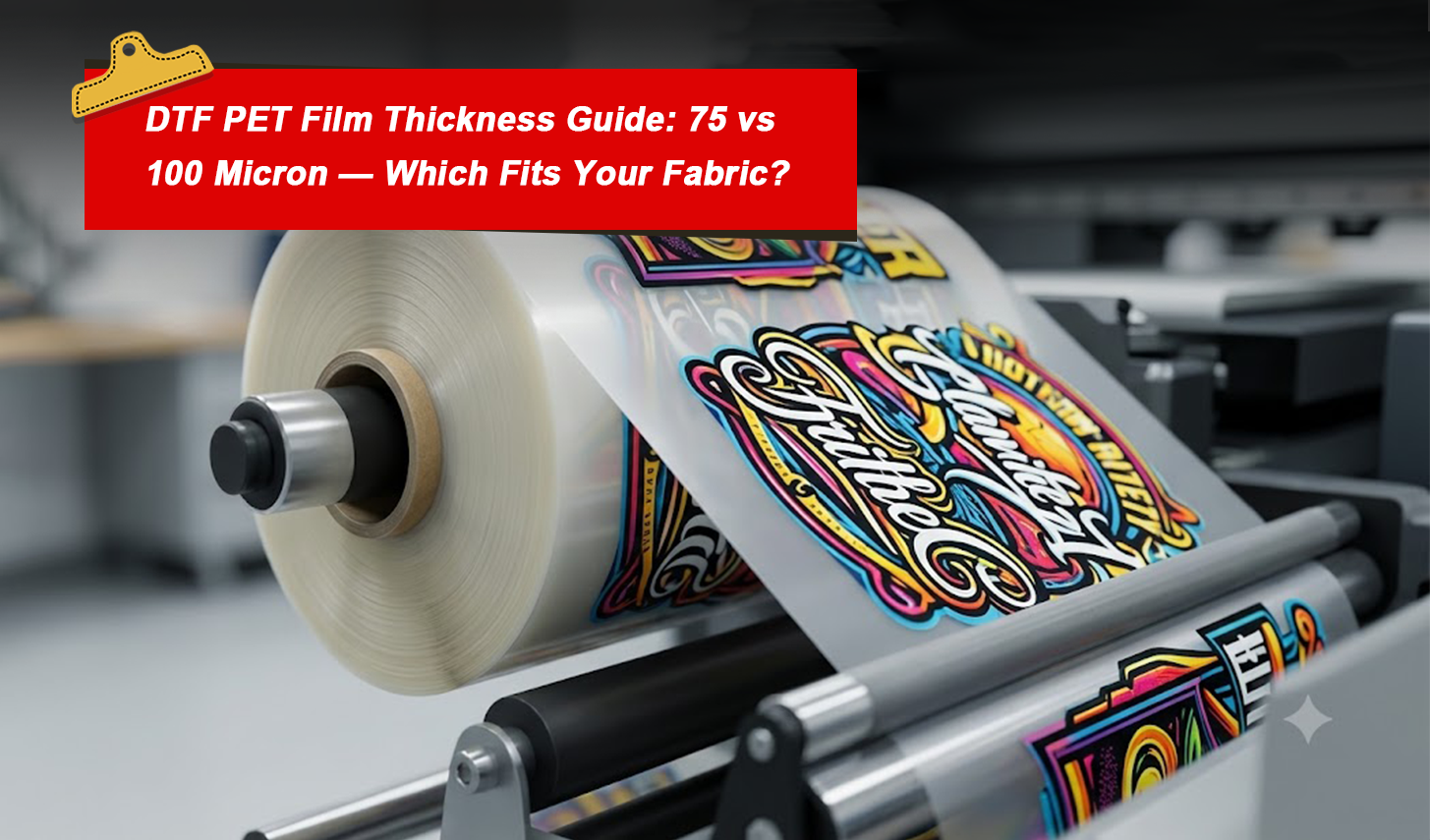
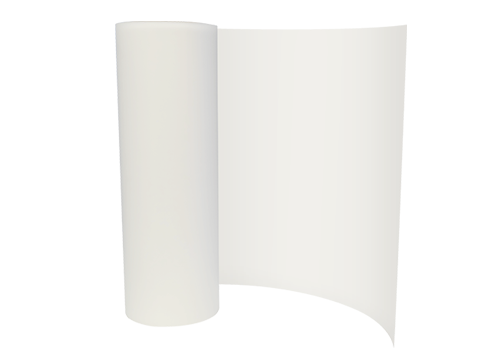
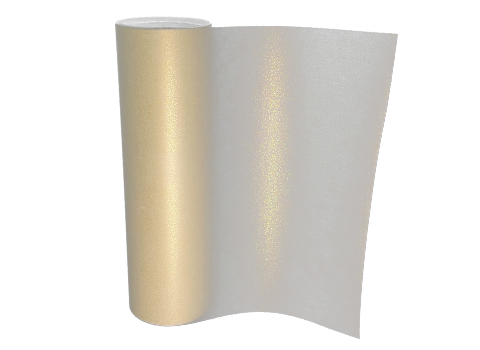
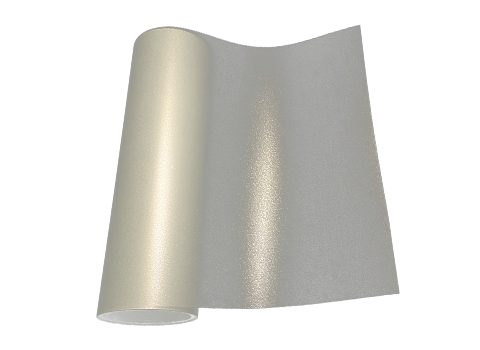
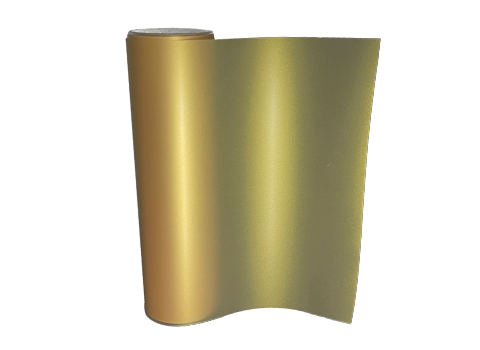
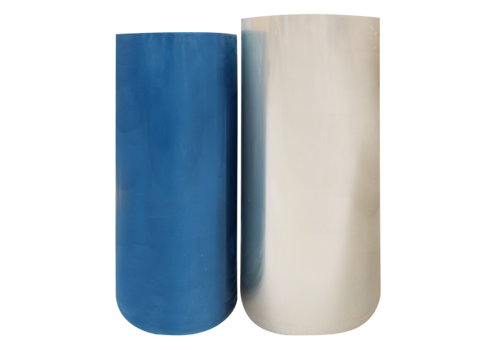
DTF PET film comes in two standard thicknesses: 75 micron and 100 micron. 75-micron film is thinner and more flexible, giving a softer hand-feel — best for T-shirts, light fashion fabric, and fine-detail designs. 100-micron film is stiffer and more dimensionally stable — best for hoodies, canvas, denim, and heavier or high-speed roll-fed production. Some suppliers also offer an 80–90 micron middle ground for shops that want extra feeding stability without the added stiffness of full 100-micron film.
Thickness isn't a quality rating — a thin film isn't automatically "cheap" and a thick film isn't automatically "better." It's a fit decision based on your fabric, your printer's feed tension, and the hand-feel your customers expect from the final garment.
Why Film Thickness Actually Matters
Thickness affects three things in a DTF workflow, independent of coating quality:
- Hand-feel of the final print — thinner film transfers a softer, more flexible print; thicker film transfers a slightly stiffer, more durable one.
- Feeding stability — thicker film tracks flatter and resists curling on roll-fed and high-speed setups; thinner film can be nimbler on desktop printers with lighter tension systems.
- Detail precision — thinner film is generally favored for fine text and intricate line work; thicker film holds up better under the mechanical tension of continuous, high-volume runs.
75 Micron vs 100 Micron: Quick Comparison
| Type | 75 Micron | 100 Micron |
| Feel | Softer, more flexible | Stiffer, more durable feel |
| Best fabric type | Light fashion fabric, cotton tees, jersey | Hoodies, canvas, denim, workwear |
| Feeding behavior | Nimble, easy on desktop/A3-A4 printers | Tracks flatter, resists curl on rolls |
| Design type | Fine detail, small text, soft-hand priority | Large designs, high-speed continuous runs |
| Ink/powder use | Slightly more ink-efficient | Slightly more opaque, deeper color feel |
Which Thickness Fits Which Fabric?
Light fabric (T-shirts, jersey, light fashion cotton)
Use 75-micron film. The garment stays soft to the touch, and thinner film feeds easily through A3/A4 desktop printers without extra tension adjustment.
Medium-weight fabric (polyester blends, polos, canvas totes)
Either thickness works. Choose 75 micron if hand-feel is the priority; choose 80–100 micron if you're running rolls at higher speed and want flatter, more stable feeding.
Heavy fabric (hoodies, sweatshirts, denim, workwear)
Use 100-micron film. The added stiffness holds up better through the mechanical tension of continuous roll-fed production and pairs well with the heavier press settings these fabrics typically need.
Rough-textured fabric (canvas, twill, heavier weaves)
Use 100-micron film. Thicker film resists curling and tracks flatter across an uneven surface, reducing the chance of ghosting or misalignment during the press.
Special Case: Large-Format Designs and High-Speed Production
Large, continuous designs printed on wide-format rolls put more mechanical tension on the film during feeding and take-up than small, individual prints. In this scenario, thickness matters more than usual — 100-micron film (or an 80-micron "production-grade" option, where available) resists stretching and curl far better than 75-micron film under that tension, which directly reduces mid-run alignment errors and reprints.
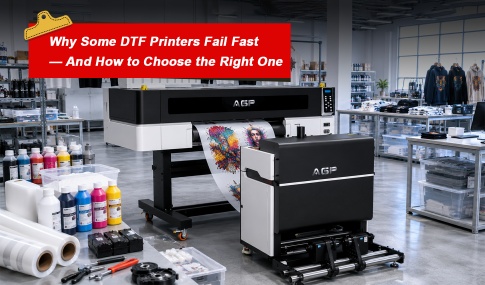
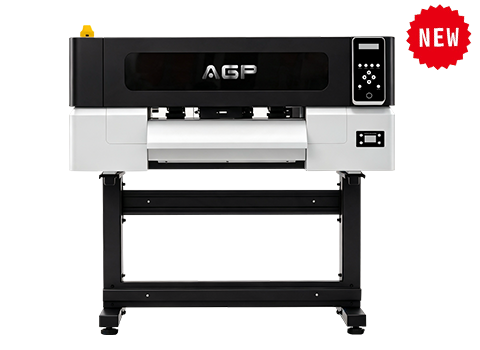
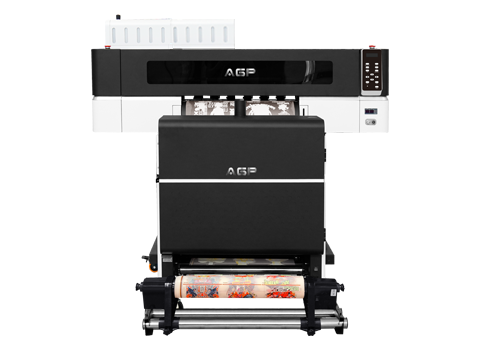
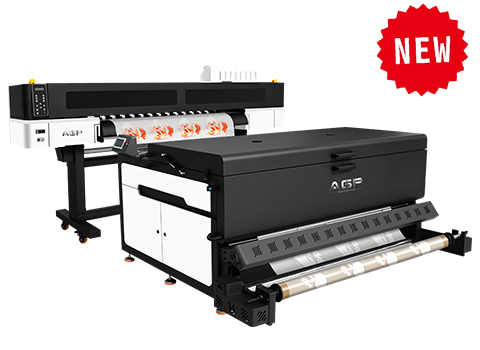
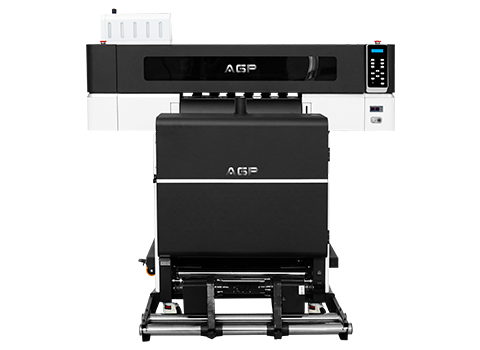
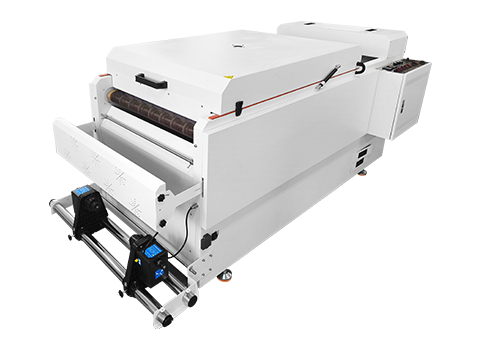
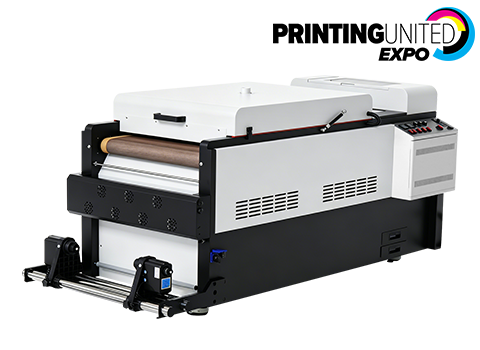
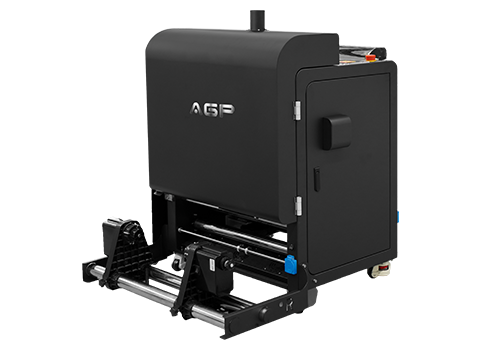
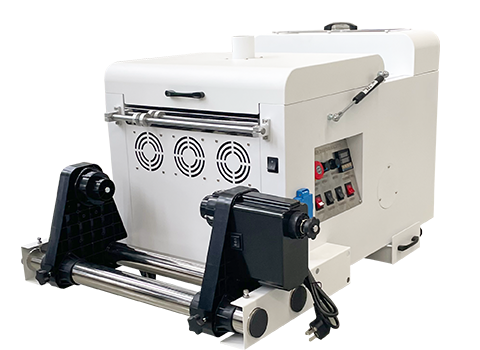
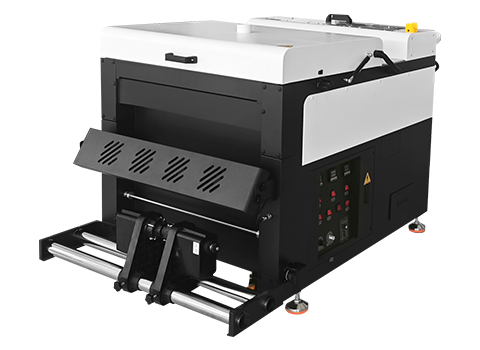
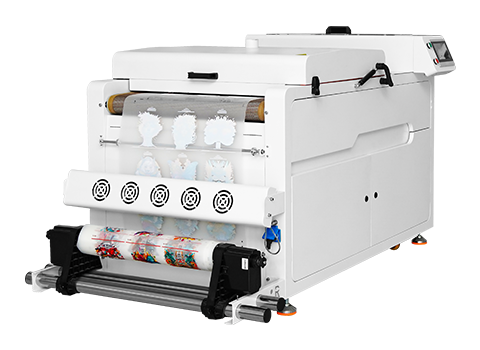
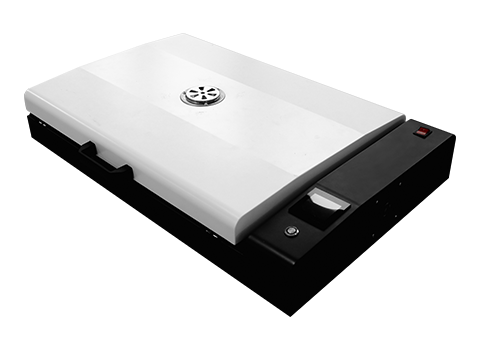
If your setup runs a powder shaker with automatic tension take-up (like AGP's H6505 or H650L), matching a slightly thicker film to that tension system tends to produce more consistent results than defaulting to the thinnest available option.
How AGP DTF PET Film Fits Into This
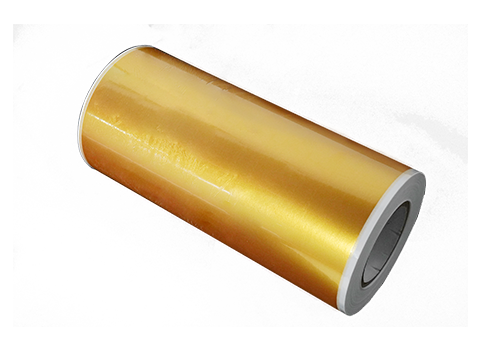
AGP's DTF PET film is available across the width range most shops need — 30cm, 33cm, 35cm, 60cm, 80cm, 120cm, and 160cm, in 20m, 50m, and 100m rolls — with steady peel strength and consistent ink absorption across the line. Exact micron thickness is confirmed per SKU on request, so if you're matching film to a specific printer or fabric type, it's worth confirming the spec sheet before ordering in bulk.
Frequently Asked Questions
Q: What's the standard thickness range for DTF PET film?
A: Most DTF PET film falls between 75 and 100 microns. 75 micron is the more common "general use" option; 100 micron is used for heavier fabric and higher-speed production.
Q: Is thicker DTF film always better quality?
A: No. Thickness is a fit decision, not a quality rating. A well-coated 75-micron film can outperform a poorly coated 100-micron film. Match thickness to your fabric and production speed, not to price alone.
Q: Can I use 75-micron film for hoodies or canvas?
A: You can, but 100-micron film generally tracks flatter and resists curling better on heavier or rougher-textured fabric, which reduces the chance of misalignment during the press.
Q: Does film thickness affect peel type (hot peel vs cold peel)?
A: No — thickness and peel type are independent specs. You can find both hot-peel and cold-peel film at either 75 or 100 microns; choose peel type based on your production speed preference, not thickness.
Q: Does thickness affect how much powder or ink I use?
A: Slightly. Thinner film is generally more ink-efficient, while thicker film can produce a marginally more opaque, saturated finish. The difference is minor compared to coating quality and printer settings.
Conclusion
Film thickness is one of the simplest specs to get right once you know what to look for: match it to your fabric weight and your production setup, not to whichever option looks cheapest. Light garments and fine-detail work lean toward 75 micron; heavier fabric and high-speed roll production lean toward 100 micron. Everything else — coating quality, peel type, storage — matters just as much, but thickness is the first decision that shapes how the rest of your workflow behaves.
Ready to Match Film Thickness to Your Production Line?
AGP supplies DTF PET film across 7 standard widths with consistent coating quality batch to batch — built to pair with AGP DTF printers and powder shakers for stable, repeatable transfers.